Accounting Surplus and Actual Cost of Electricity Generation in Greece
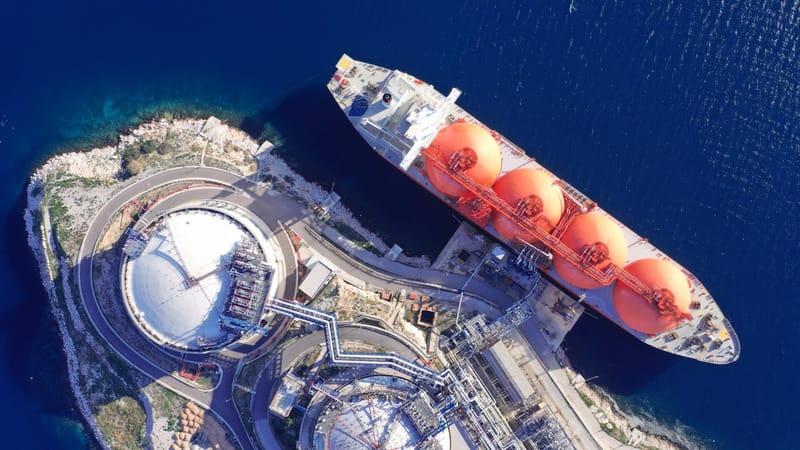
The “positive balance” of electricity reported in recent official announcements is accounting‑wise accurate but economically misleading. The surplus of €341 million refers exclusively to cross‑border electricity trading, without factoring in the cost of the domestic generation that supports it. That generation relies almost entirely on imported natural gas and LNG, with power production absorbing roughly 70% of total gas imports. When the cost of the fuel required to operate thermal units reaches €1.3 billion, it becomes clear that the real economic burden is many times greater than the advertised accounting surplus.
LNG dependence , CO₂ costs and the real price of a MWh
In 2024, total natural gas imports amounted to about 6.2 bcm (69 TWh thermal). LNG accounted for 50–60% of the mix, despite increased pipeline flows. Of this quantity, electricity generation consumed roughly 3.7 bcm or 41 TWh thermal, pushing fuel costs to €1.3 billion.
To this must be added the cost of CO₂ allowances. Gas‑fired units emit 0.35–0.40 tCO₂/MWh, and with allowance prices at €60–70/t, the final MWh is burdened with €22–28/MWh. CO₂ acts as a constant cost multiplier, significantly raising the final cost of electricity generation.
With thermal efficiency at 50–55% for older units and up to 60% for newer ones, 1.7–2 MWh of thermal fuel are required for every 1 MWh of electricity. At an LNG price of €50/MWh, fuel costs alone reach €85–100/MWh electric, before adding CO₂. In total—fuel, emissions, and operating costs—the variable cost of gas‑fired power generation in Greece reaches €100–140/MWh, among the highest in Europe when the system relies on thermal units.
Marginal pricing and its impact
The System Marginal Price is set by the most expensive unit needed to meet demand, which in Greece is almost always a gas‑fired unit. Under the marginal pricing model, the high cost of LNG pulls up the remuneration of all producers, effectively cancelling out the consumer benefit of renewables.
Ptolemaida V, with higher efficiency and a lower emissions factor (0.75–0.80 tCO₂/MWh), reduces CO₂ costs and brings total generation costs to €75–110/MWh. It is not a cheap solution, but it could significantly reduce natural gas imports and the country’s energy dependence.
Gas price volatility, spot markets and regional comparisons
In 2025–2026, natural gas prices remain volatile due to geopolitical tensions and disruptions in LNG shipping routes. Despite long‑term contracts and hedging tools, Greece remains exposed to the spot market to cover its needs. LNG is 30–50% more expensive than pipeline gas, while major European economies benefit from stronger infrastructure, diversified supply, and greater bargaining power.
Comparisons with the Iberian Peninsula and Italy are telling: these countries have long‑term LNG contracts, strong hydro or nuclear baseload, and extensive interconnections, keeping MWh costs lower. Even more striking is the comparison with Romania and Bulgaria. Bulgaria leverages nuclear output from Kozloduy and stable pipeline flows from Azerbaijan, while Romania relies on domestic gas production, hydro capacity, and the Cernavodă nuclear plant, while investing in SMRs. Two countries with lower per‑capita GDP achieve lower energy prices thanks to structural advantages: domestic production, nuclear capacity, strategic pipelines, and underground storage.
Greece, by contrast, lacks underground gas storage, and its infrastructure functions as import terminals, not strategic reserves. Its energy mix remains exposed to LNG market fluctuations, despite long‑term contracts. As long as it relies on 100% imported fuel without adequate safeguards, it will continue to show accounting surpluses in electricity exports but suffer a real economic drain in its overall balance of payments.
A sustainable path forward requires investment in energy storage, stronger interconnections, reduced exposure to spot LNG, and evaluation of new clean, firm baseload technologies.
Naftemporiki / Opinions, Friday, May 29, 2026