Energy Transition Tango in SE Europe: LNG vs. Green Power
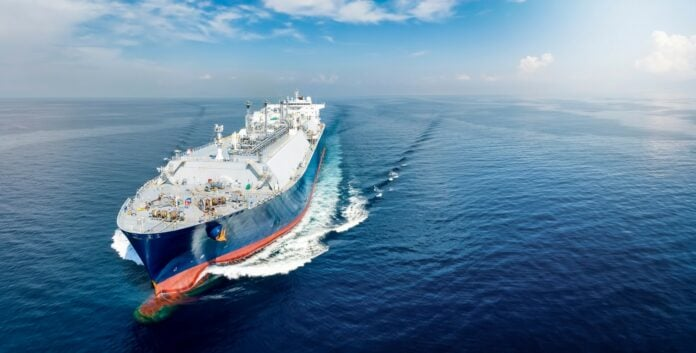
The European Commission’s decision to advance the Green Corridor (GSI) without further studies illustrates how geopolitical will can override economic and technical reasoning. The expected decline in European gas prices in 2026 and 2027 will not signal global energy sufficiency but rather a short-term correction in the LNG market. With around 100 bcm per year of new capacity from projects such as Golden Pass and Qatar, supply will temporarily outpace demand, shifting market power from sellers to buyers and lowering spot prices. Yet this relief is fragile: Asia’s structural demand, driven by China, India, and Pakistan and amplified by the explosive growth of artificial intelligence and data centers, will sustain high global LNG consumption. These facilities require dense, reliable energy around the clock, which renewables cannot provide without massive storage investments. Only natural gas and nuclear power can meet this demand directly, leaving Europe exposed to renewed price volatility if Asian demand surges.
In this environment, the United States is investing to position Greece as a gateway for the Vertical Gas Corridor to the Balkans and Ukraine, where gas needs by 2035 are projected between 9 bcm per year under EU scenarios and 15–20 bcm per year based on infrastructure capacity. However, if American companies collaborate with Russian producers in future LNG projects, the corridor’s geopolitical role as a non-Russian supply route could diminish. Meanwhile, Cyprus and Greece may later draw electricity from mainland Europe or the Middle East, reducing reliance on LNG-based peak plants. The Cypriot regulator has refused to pass project costs to consumers before the cable is operational, emphasizing the risk that Turkey could obstruct the project and shift the burden onto taxpayers.
The U.S. International Development Finance Corporation’s interest in the GSI is strategic rather than economic, serving as a deterrent against Turkish interference. The EU’s rush to accelerate the project reflects concern that U.S. involvement could impose conditions favoring LNG investments and dilute its “green” character. For Cyprus, however, American participation offers the only tangible guarantee of protection. Ultimately, Greece cannot depend solely on U.S. LNG cargoes or EU green capital. To secure a resilient energy mix for the digital and industrial era, it must prioritize the exploitation of domestic deposits, such as those south of Crete, following Cyprus’s example. Only through its own production can Greece ensure reliable energy autonomy in a rapidly shifting global landscape.
NAFTEMPORIKI / OPINIONS, Wednesday, December 10, 2025
Τανγκό της Ενεργειακής Μετάβασης στη ΝΑ Ευρώπη: LNG και Πράσινο Ρεύμα
Republication of the article in defense-point.gr : Ευρώπη-Ελλάδα-Κύπρος, LNG και του Interconnector τα πάθη
https://www.defence-point.gr/eyropi-ellada-kypros-lng-kai-toy-interconnector-ta-pathi