Escalation and the Mechanics of a Regional Shock
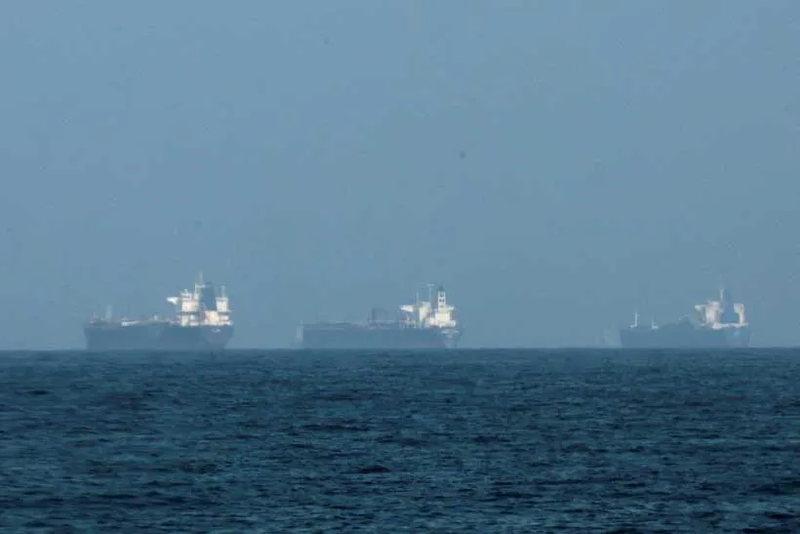
What began as a single strike on 28 February 2026 quickly spiraled beyond containment. Iranian retaliation swept across U.S. installations in the United Arab Emirates, Qatar, Bahrain, Saudi Arabia, Iraq, and Kuwait, transforming a discrete event into a regional shockwave. In an international system already conditioned by the war in Ukraine and a lowered threshold for military action, the challenge is no longer the impact of one disruption.
A large share of Asian LNG is still priced through formulas tied directly to Brent crude, which means that any movement in oil prices shows up almost instantly in LNG prices. These formulas typically apply a percentage of the Brent price, usually between 10% and 12%, and then add a small fixed premium of 0.50 dollars per MMBtu. The percentage reflects the historical link between LNG and oil in long term contracts, while the fixed premium covers shipping, logistics and contractual adjustments. As a result, when Brent rises, LNG prices adjust mechanically and immediately, without waiting for physical market changes or new supply to appear. Today’s 73 dollar Brent yields about 9.26 dollars per MMBtu, but 120 dollars lifts LNG to nearly 15 dollars, 150 dollars to 18.50 dollars, and 200 dollars to 24.50 dollars. Yet the most destabilizing element may not be the formula but the ability to ship at all. Insurers have already activated 7 day cancellation clauses for vessels transiting Hormuz, with war risk premiums rising from about 0.25% to 0.50% of hull value, an additional 250,000 to 375,000 dollars per voyage for a 100 million dollar LNG carrier. Even if the strait remains technically open, insurance withdrawal can create a de facto closure, since no vessel sails uninsured and banks and ports require coverage.
U.S. enters the crisis with an energy system moving in conflicting directions. Crude output has begun to soften, falling to 13.66 million barrels per day in December 2025, its lowest level since June, as lower prices and declining well productivity slow drilling activity. At the same time, domestic demand has climbed to 20.85 million barrels per day, the highest since August, underscoring a tightening internal balance. In sharp contrast, natural gas production has surged to a record 135.9 billion cubic feet per day, highlighting the widening divergence between oil and gas fundamentals. Even before the crisis, the Energy Information Administration expected U.S. crude production to edge down to 13.5 million barrels per day in 2026, with shale productivity gains largely exhausted; new well output per rig rose less than 2% between mid 2024 and mid 2025. A Brent price above 100 dollars would normally revive Permian drilling and generate additional associated gas, but only after a 6–9 month lag. U.S. remains the world’s largest LNG exporter, shipping 123 billion cubic meters in 2024 and heading toward 185 billion in the coming years, yet its ability to ramp up quickly is constrained by pipeline bottlenecks in Appalachia, the swing producer role of Haynesville, and the dependence of Gulf Coast terminals on stable feedgas flows.
Global spare capacity of oil offers little relief. OPEC officially cites 4 to 5 million barrels per day of spare capacity, but independent estimates place true deployable capacity closer to 1.5 to 2.5 million, concentrated in Saudi Arabia and the United Arab Emirates. Only about 2.6 million barrels per day can avoid the Strait of Hormuz by using alternative pipelines, a tiny fraction compared to the 20 million barrels per day that normally pass through the strait and would be at risk in a major disruption. Iran itself is in no position to compensate for such a loss: its production is already declining structurally by roughly 300,000 barrels per day each year, a trend made worse by the damage inflicted on key infrastructure during the June 2025 strikes on South Pars and Kharg Island.
Russia benefits from a configuration that shields it from the worst effects of the crisis. Several factors reinforce this position. Russian crude and LNG do not transit the Strait of Hormuz; Russian discounts narrow as Asian buyers diversify away from Middle Eastern grades now exposed to war related risk; pipeline gas to China remains untouched by maritime chokepoints; and Arctic LNG gains relative value as Middle Eastern cargoes face insurance and routing constraints. In an environment where maritime risk premiums surge, Russia’s land based export corridors become comparatively more attractive, strengthening Moscow’s bargaining power in Asia and accelerating the long term reorientation of its energy flows.
China enters the crisis with structural vulnerabilities that have now become immediate strategic concerns. Beijing is urging all parties to safeguard navigation through the Strait of Hormuz, pressing Iran to halt attacks on oil tankers and LNG carriers, and warning that Hormuz and its adjacent waters are essential arteries for global trade and energy flows. The pressure reflects China’s growing exposure: oil shipments from Iraq, Kuwait and Saudi Arabia have already fallen sharply, Iranian supplies may face prolonged interruption, and nearly 30% of China’s LNG imports come from Qatar, whose exports have been disrupted following the strikes on Ras Laffan. A sustained blockage would reverberate through the global gas market and strain Beijing’s relationship with Tehran if attacks on shipping continue.
The crisis ultimately reinforces U.S. dominance in global energy, as U.S. LNG becomes the only supply source that is both scalable and politically reliable for Asia and Europe. Higher oil prices boost upstream cash flow and improve the economics of U.S. shale, with stronger international benchmarks encouraging producers to lift output and pushing Henry Hub closer to the breakeven levels of higher‑cost basins. Firmer price signals, combined with ongoing infrastructure expansion, support a steady increase in U.S. LNG availability over the coming years, gradually shifting the balance of power in the global market. As this dynamic unfolds, the dollar’s central role in energy trade expands, U.S. naval control of key sea lanes becomes even more critical for Asian energy security, and China grows increasingly dependent on U.S.-aligned maritime protection and U.S.-origin LNG, even as it seeks to limit its exposure.
While the Gulf absorbs this first shock, another strategic realignment unfolds on the Mediterranean. India’s return to Haifa, a century after the 1918 cavalry charge, reflects both historical memory and contemporary geoeconomics. Haifa handles 36% of Israel’s maritime traffic, and its activity surged by about 80% after the attacks of 7 October 2023. In 2022, Adani Ports acquired the port for just over 1 billion dollars, anchoring India’s presence in Israel’s main maritime infrastructure and positioning Haifa as a key node in the IMEC, a 6,000-kilometer route designed to reduce transit times by 40% and costs by 30%, offering an alternative to China’s BRI. In fact Haifa has become a strategic hinge between Asia and Europe, where military history and contemporary trade routes converge.
The Leviathan gas field adds another layer to this Mediterranean pivot. As one of the largest offshore gas fields in the Eastern Mediterranean, Leviathan provides Israel with export flexibility toward Egypt, Jordan and potentially Europe. In a world where 20% of global LNG risks being trapped behind Hormuz, even modest Mediterranean volumes acquire disproportionate strategic value, reinforcing the IMEC corridor and reducing Europe’s exposure to Gulf chokepoints. At the same time, the Eastern Mediterranean is emerging as a second front. The expansion of Leviathan to 21 bcm per year was approved to strengthen flows to Egypt and Jordan, but under the threat of Iranian strikes the Israeli government requested a suspension of platform operations, prompting Chevron to declare force majeure. The region offers opportunities, but it remains highly vulnerable, and the crisis underscores this reality.
The current situation represents a configuration with no modern precedent: a potential oil shock on the scale of 1979; a chokepoint that carries 20% of global LNG with no alternative route; a U.S. shale sector far less elastic than during its peak expansion; an OPEC spare capacity buffer too small to absorb a major disruption; an Iranian supply base that cannot be restored quickly; and a global system in which crises no longer unfold sequentially but simultaneously. Under these conditions, the LNG market between 2026 and 2030 becomes structurally bifurcated. Asian buyers locked into oil indexed contracts face cost increases exceeding 100%, while TTF and JKM could revisit the extreme price levels of 2022. With roughly one fifth of global LNG effectively trapped behind Hormuz in a severe scenario, the physical shortfall cannot be replaced in the near term, because new U.S. LNG capacity requires three to four years to come online. The question is no longer simply whether prices will rise, but whether the disruption remains contained or cascades into the most severe supply crisis in half a century.
Modern Diplomacy / Energy, Wednesday, March 4, 2026
Strait of Hormuz: Escalation and the Mechanics of a Regional Shock - Modern Diplomacy
Also in Substack/ Energy, Tuesday, March 3, 2026
https://mdbriefing.substack.