Europe between Nuclear Renaissance and Global Competition
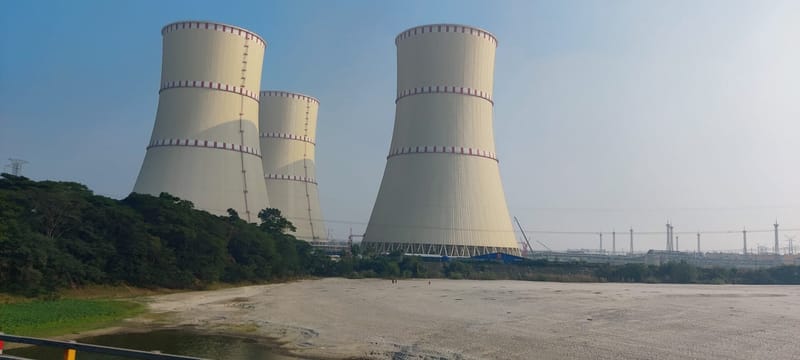
In 2022–2023, countries such as Germany, Austria, Luxembourg, and Denmark were openly anti-nuclear, talking about complete independence and "outdated technology," pushing for it not to be considered "green."
However, the energy crisis changed the context. High electricity prices, supply insecurity, and the shock of expensive natural gas forced many governments to reconsider. Public rhetoric has become more cautious, absolute positions have receded, and "technical" explanations for prices are now used to avoid politically difficult discussions. Social acceptance remains slow, but circumstances are pushing for a gradual shift.
Europe operates around 100 reactors, many of which are in need of upgrading. France remains the nuclear giant, producing over half of the EU's nuclear power with 57 reactors, and has recovered from the corrosion problems of 2022–2023. Finland has gained a stable power source with OL3, while Poland is completing the AP1000 program and the Czech Republic, Slovakia, and Romania are accelerating their SMR studies.
At the same time, data centers are changing energy needs. Artificial intelligence and the cloud now require gigawatts of power. The US is creating nuclear parks exclusively for data centers, China is integrating nuclear energy into its digital network, while Europe is facing saturated networks, slow licensing, and inconsistent rules. Ireland, the Netherlands, and Germany have already reached the limits of their infrastructure. The need for stable, 24/7 power makes nuclear energy almost irreplaceable for maintaining European competitiveness.
At the geopolitical level, dependence on Russia remains. Countries with Russian-designed reactors continue to use Russian fuel or enrichment. At the same time, Kazakhstan, the largest uranium producer, is reducing its production in 2026, driving up prices and exposing European vulnerability.
The debate is no longer "nuclear or renewable energy." Renewable energy is growing fast, but it doesn't cover all needs. Batteries only store energy for a few hours. So new solutions are emerging: methane pyrolysis for CO₂-free hydrogen, solid carbon for sodium batteries, and industrial processes that require stable, high-temperature energy, which nuclear can provide.
Floating nuclear power plants are increasingly being discussed, but the need for them is not a given. Europe is investing in new cable interconnections in the North Sea, the Baltic Sea, and the Mediterranean; if these are expanded as planned, the usefulness of floating nuclear plants for island regions will be significantly reduced. Furthermore, regulations, safety, and social acceptance make it unlikely that they will appear before the mid-2030s.
In this context, the example of the Oklo natural reactor, active two billion years ago in Gabon, is back in the public debate. The geological stability of its waste serves as a tangible argument that nature has already achieved what modern technologies are striving for: safe long-term storage. Oklo does not solve technical issues, but it does strengthen social consensus.
Overall, nuclear energy in Europe is no longer just about electricity generation. It is about the digital economy, hydrogen, industrial heat, new materials, and energy security. The challenge is to modernize the fleet, secure fuel, and integrate nuclear energy into a smart system that combines renewable energy, storage, and new technologies, without losing social consensus.
NAFTEMPORIKI / OPINIONS, Friday, February 13, 2026
Η Ευρώπη ανάμεσα σε Πυρηνική Αναγέννηση και Παγκόσμιο Ανταγωνισμό