Europe Under Pressure: The Baltic–Balkans–Strait of Hormuz and Europe’s Untapped Reserves
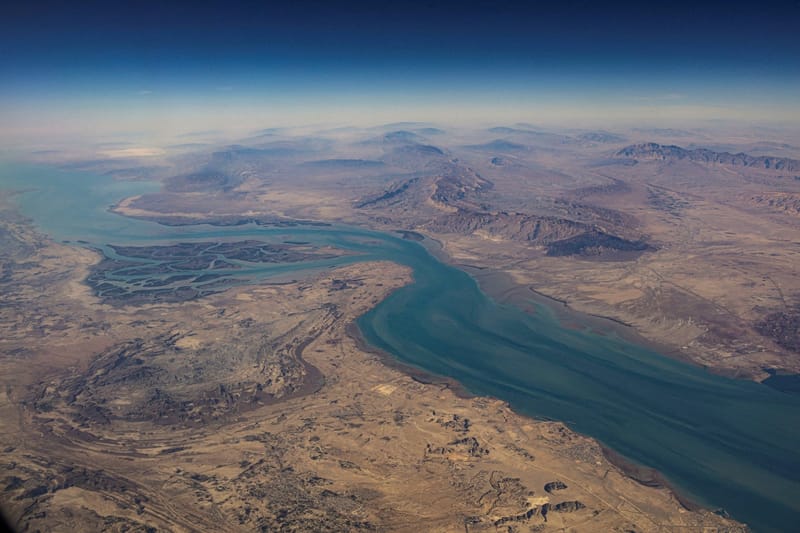
The political noise surrounding the incident, Belgrade's defensive stance, Budapest's alignment with Moscow, Kiev's denials, Brussels' silence, blurs the strategic reality. Europe's remaining dependencies now intersect with an arc of hybrid attacks that stretches from the Black Sea to the Eastern Mediterranean and, now, to the Strait of Hormuz.
TurkStream is the last operational artery that transports Russian gas via pipelines to the European Union. Nord Stream was destroyed in 2022, Yamal Europe was stopped, and the Ukrainian crossing ended on January 1, 2025. What remains is a single corridor that starts from Russia, passes through Turkey and then crosses Bulgaria, Serbia and Hungary, with a side flow to Greece. In 2025, TurkStream delivered about $11.5 billion. in the first eight months of the year, compared to a full annual capacity of €15.75 billion. In an EU that consumes about 350 billion euros. per year, this corresponded to only 4.5% of demand in 2025. And yet, this small volume has gained disproportionate strategic weight, precisely because it is the last remnant of a once dominant system.
Before 2022, the EU imported €155 billion. m.m. of Russian gas through pipelines every year. Today, only 10-15 billion. arrive via TurkStream. Europe has compensated for the loss by turning massively to LNG. Imports increased from about $80 billion. in 2021 to 135–140 billion. in 2023–2025, replacing about a third of the lost Russian quantities. The rest was covered by a decrease in demand, increased flows from Norway and North Africa, warehouse optimisation and fuel substitution. This shift has reshaped global markets and linked Europe to maritime pricing dynamics driven by Asian demand. Dependence on Russia has decreased, but exposure to global LNG volatility has increased.
This is where the incident in Serbia acquires geopolitical significance. It is not an isolated act, but part of a larger pattern. In the Krasnodar region, the heart of the Black Sea export system, drone attacks, fires and explosions have repeatedly hit compressor stations and pipeline hubs. In the Eastern Mediterranean, research vessels in the EastMed corridor have been intercepted, Israeli offshore platforms have been attacked by drones, and the Balticconnector pipeline between Finland and Estonia was cut in 2023. The geography of energy security has been dismantled, with the result that land, sea and seabed are now equally exposed.
Second level of geopolitical pressure
The resurgence of instability in the Strait of Hormuz adds a second layer of geopolitical pressure. Europe is not particularly dependent on Gulf LNG in natural volumes, but is crucially dependent on global LNG prices. When Hormuz becomes unstable, Asian buyers bid for cargo, markets tighten, and costs for Europe rise. The logic is reminiscent of the "Tanker War" of the 1980s, but adapted to an era of drones, cyber disruption and actors with the ability to deny responsibility. Europe has moved from dependence on a major land-based supplier to dependence on a global maritime system that is increasingly being challenged.
These events form a continuous arc of vulnerability from the Black Sea to the Gulf. The attempted sabotage of TurkStream, the attacks in Krasnodar, the harassment of Mediterranean platforms and the turbulence in Hormuz are not separate crises. Europe now faces two critical points: a land corridor in the Balkans and a maritime corridor in the Gulf, both vulnerable to "grey zone" pressures.
By 2026, TurkStream's flows remain at $10–15 billion. per year, but with more intense fluctuations due to maintenance, political messages and instability. Greece continues to receive Russian gas through Bulgaria, albeit at reduced levels, and these quantities remain critical for balancing the system during peak periods. Europe has reduced Russian gas from 35% before 2022 to about 8% today, but the reduction does not equate to elimination. Even a 4.5% dependency acquires strategic importance when concentrated in a single aisle.
The explosions in Nord Stream have shown that pipelines can now be used as means of pressure, while the instability in the Strait of Hormuz proves that maritime energy routes are subject to the same logic. In this environment, Europe cannot ignore the fact that it has some 450 hydrocarbon deposits that have been classified as "stranded" (inactive or politically decommissioned). This categorization was made at a time when energy security was taken for granted. But today, with sea routes under pressure, pipelines vulnerable to hybrid attacks, and LNG prices determined by external crises, Europe cannot afford to leave its own underground potential idle.
The review of these deposits will recognise that energy security is a prerequisite for any transition. Harnessing some of this resource can act as a strategic counterweight, reducing reliance on volatile routes and markets shaped by others. Simply put, Europe cannot treat its own deposits as "stranded" when it remains trapped in a network of vulnerabilities that it does not control. Their reintegration into the energy plan is an adaptation to the new geopolitical reality.
NAFTEMPORIKI / OPINIONS, Tuesday, April 7, 2026
Η Ευρώπη σε Τόξο Πίεσης: Βαλτική–Βαλκάνια–Ορμούζ και τα Ανενεργά Κοιτάσματα της Ευρώπης