Heavy oil and Venezuela's new role - Copy
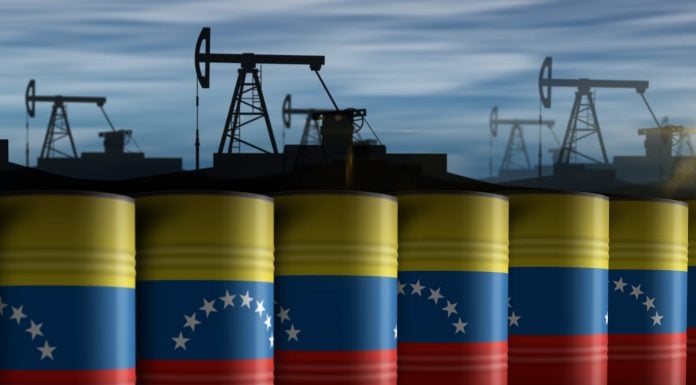
Venezuela's place in world energy history is much more important than current production figures suggest. During World War II, the country was nothing less than the fuel backbone of the Allied effort. The crude oil transported to the Aruba and Curaçao refineries fed British naval convoys, American aircraft and the logistics chain that supported the campaign in the Atlantic. This strategic contribution earned Venezuela the landmark of the 1943 Hydrocarbons Law and the 50/50 profit-sharing model that later reshaped global oil governance.
The crude oil transported to the Aruba and Curaçao refineries fed British naval convoys, American aircraft and the logistics chain that supported the campaign in the Atlantic. This strategic contribution earned Venezuela the landmark of the 1943 Hydrocarbons Law and the 50/50 profit-sharing model that later reshaped global oil governance. However, the industrial power that once made Venezuela indispensable has been eroded during decades of underinvestment, political turmoil, and institutional disintegration. The country is now at a crossroads: endowed with excellent geological resources, but without the operational, financial and managerial foundations needed to transform them into reliable production. Understanding this contrast requires a clear picture of how reserves are classified, how heavy oil geology limits the economy, and how above-ground factors have degraded what was once one of the world's most capable oil industries.
Proven Reserves
In professional oil practice, "proven reserves" are not just volumes known to exist underground. These reserves must simultaneously be discovered, technically recoverable and commercially derivable under current operational and economic conditions. This triad forms the backbone of modern inventory classification. The Securities and Exchange Commission (SEC) applies the strictest interpretation, the PRMS (Petroleum Resources Management System) offers a more flexible yet disciplined framework, and OPEC's national reporting remains the most permissive.
Venezuelan stock declarations fall into this more permissive category. The increase from about 80 billion barrels in 2005 to more than 303 billion by 2015 did not reflect new drilling, technological breakthroughs or significant development activity. It was an administrative reclassification of heavy and extremely heavy oil in the Orinoco Zone. Under stricter PRMS or SEC criteria, most of these volumes would be categorized as contingent resources rather than proven reserves. The geology is not in doubt: these barrels have indeed been discovered and are technically recoverable in principle. But without stable fiscal terms, operational infrastructure, lifting of sanctions and credible development plans, they cannot be registered as 1Ps (proven reserves). At best, a significant subset could be considered a possible 2P (sum of proven and probable reserves), assuming the performance of service companies, investment stability, and mid-cycle oil prices. The rest remains dependent.
Heavy Oil Geology
The Orinoco Belt is often compared to the oil fields of Alberta, Canada, and the parallel is well-founded. Both regions contain huge accumulations of viscosity, asphalt-like hydrocarbons with high porosity and permeability, but extremely high viscosity. Alberta is, in fact, geologically richer in oil than Orinoco. The difference lies in Canada's stricter stock classification standards, which keep official data conservative.
The challenge is not the size of the pore but its nature. Extremely heavy oil does not flow without help: it must be heated or diluted before it can move. Recovery factors remain low, thermal losses are significant, and fine sands, which account for a large share of Venezuela's undeveloped reserve, are technically demanding and expensive to exploit. These constraints are structural. No political reform can change the physics of viscosity, the thermodynamics of heat loss, or the mechanical limits imposed by thin, non-unified tanks.
Even under favorable conditions, Venezuela's heavy oil remains expensive. Onshore breakevens, for this type of oil, typically range between $45 and $70 per barrel, while offshore deep-sea projects require $55-75. These figures reflect not only drilling and integration costs but also the need for heating, diluent, complex refining configurations, and extensive upgrade capacity. In contrast, Saudi Arabia, like Texas and Guyana, produces lightweight, free-flowing crude oil at a lower cost. The two barrels are at opposite ends of the global cost curve.
The sanctions further erode Venezuela's competitiveness. Historically, Venezuelan crude oil has traded at discounts of $15-25 per barrel relative to Brent, to compensate buyers for compliance burdens, shipping complications, and reputational risk. A project that could balance the profits at $55 becomes unprofitable once such a discount is applied. In a $60-per-barrel world, capital is naturally drawn to short-cycle shale oil or low-cost conventional assets, not multibillion-dollar, long-cycle heavy oil operations in a high-risk jurisdiction.
Obstacles and the New North American Equation
Venezuela's production history demonstrates the depth of its structural decline. From a peak of more than 3 million barrels per day in the late 1990s, production has fallen to about 800,000-1,100,000 barrels per day in recent years. This collapse reflects severe underinvestment, degradation of wells and pipelines and upgrading of facilities, persistent electricity and water shortages, mass departure of skilled personnel, the withdrawal of major service companies, and the broad impact of U.S. sanctions.
Reversing this decline is not just a matter of drilling new wells. It requires a comprehensive reconstruction of the country's industrial base. Independent estimates estimate that more than $100 billion will be needed to rebuild upstream and midstream and upgrade infrastructure to a level capable of sustaining multi-million barrel production. In the short term, even the most optimistic scenarios require significant capital. To increase production by an additional 500,000 to 1,000,000 barrels per day in the first two to three years, Venezuela will need $10-20 billion in direct investment just to reactivate wells, repair concentration systems, restore power supply and restart plant upgrades. More than 25,000 inactive wells need to be evaluated before any restart.
Complicating matters further, Venezuela has about $190 billion in outstanding foreign liabilities, including a $10 billion compensation claim owed to ConocoPhillips after the 2007 nationalizations. Until there is a credible legal mechanism to resolve these obligations, large international operators are unlikely to commit new funds. Chevron remains active under special US exemptions, producing 150,000-250,000 barrels per day, while Repsol and Eni could increase liquid fuel production from the Cardón IV project if sanctions are lifted. However, the major IOCs remain in a cautious "wait and see" attitude. This caution is amplified by the fact that companies have already approved their exploration and production budgets for 2026, further limiting their ability to adjust their investment plans in the absence of regulatory clarity.
The geopolitical landscape around Venezuela has also changed. For a decade, heavy Canadian crude oil enjoyed a de facto monopoly on the U.S. Gulf Coast due to sanctions against Venezuela. That advantage evaporated within 48 hours of Washington's pivot toward rebuilding Venezuela's oil sector. Gulf Coast refineries have suddenly regained access to a cheaper, closer alternative than Western Canadian Select. Many refineries were originally designed to process Venezuelan crude oil and can transition from the Canadian WCS to the Venezuelan Merey very quickly. The chemistry is almost identical: both are heavy, acidic slow oils that require coking and hydrocracking. Shipping from Venezuela takes only four to five days – a short, cheap sea route that contrasts sharply with the thousands of miles of pipelines and rail transportation required to transport heavy Canadian crude oil to the Gulf Coast, which has been the dominant supply pattern for nearly two decades. For refineries, Venezuelan barrels are the logical economic option, but only if the supply becomes reliable.
As a result, the price gap between Canada's WCS and Texas' WTI will likely increase, the Trans Mountain pipeline will primarily serve as a survival route to Asian markets rather than a driver of new growth, and the United States will have much stronger bargaining power in future trade talks.
Colombia adds another layer. A historically stable supplier of heavy crude oil to the U.S., it is now going through an energy transition, halting new exploration contracts and importing more and more LNG from the U.S. For Washington, Colombia is no longer a growing source of oil, but a strategic LNG market and a test case for managed decarbonization.
Beyond the Americas, Guyana's rapid emergence as the Western Hemisphere's most dynamic offshore province, with approved multibillion-dollar projects and aggressive development timelines, offers a striking contrast to Venezuela's high-risk, long-cycle barrels. At the same time, the Eastern Mediterranean continues to evolve as a strategic gas corridor, with 2026 budgets in Cyprus, Israel, and Egypt allocating significant funds for evaluation drilling, subsea infrastructure, and LNG-related expansions. These regions demonstrate how investment is increasingly flowing towards basins with clearer fiscal regimes, lower above-ground risk and faster monetisation pathways.
The Future of Venezuelan Oil
Venezuela has a relatively small volume that could qualify as a true 1P reserve based on strict PRMS or SEC criteria. Beyond that, there is a larger but still uncertain portion that could be considered 2P, provided that the country achieves fiscal stability, a substantial lifting of sanctions, and the return of service capacity. The overwhelming balance consists of contingent resources whose development depends on massive capital investment, the reconstruction of industrial and institutional systems and a long-term process of political normalization.
Technically demanding, economically expensive, and geopolitically constrained, Venezuelan barrels cannot replace the low-cost production of the Middle East. These are long-cycle, high-risk assets whose future depends on governance and international alignment as well as on geology. The country once fueled the Allied war effort and shaped the global governance of oil. Today, it must rebuild the industrial, fiscal and geopolitical foundations that turn resources into production.
NAFTEMPORIKI / OPINIONS, Tuesday, January 13, 2026
Το βαρύ πετρέλαιο και ο νέος ρόλος της Βενεζουέλας