Maritime power, energy dependence, and challenges for Asia
The Broader Strategic Lens
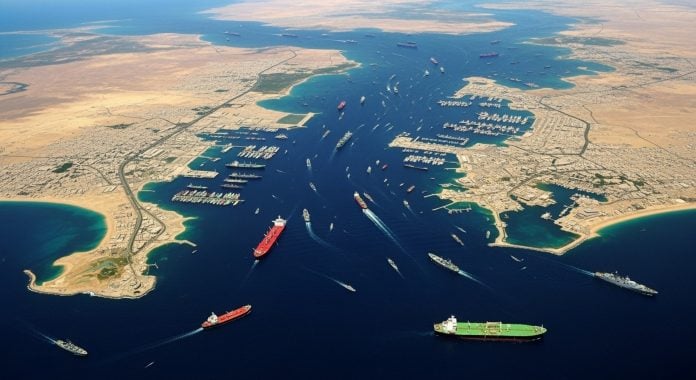
Recent events in the Middle East have turned the Strait of Hormuz into a focal point where energy flows, maritime security, and geopolitical rivalry now intersect with unprecedented intensity.
A Chokepoint of Global Scale
The global energy system relies on several maritime passages, yet none combine volume, vulnerability, and tension like Hormuz, with about 20 million barrels per day in 2024, nearly one‑fifth of global consumption, and with 84% of crude and 83% of LNG heading to Asian markets. Saudi Arabia and the UAE offer limited bypass capacity, only 2.6 million barrels per day, leaving most flows exposed, and even without a blockade, tension alone pushes Brent upward, raises war‑risk premiums, and slows tanker traffic dramatically. Despite OPEC+ cuts and increased use of Saudi Arabia’s East‑West pipeline, the strait still carries over a quarter of global seaborne oil trade and remains a major LNG corridor.
Asia is the Primary Recipient
Four Asian importers, China, India, Japan, and South Korea, absorb most of the energy passing through Hormuz, with China as the largest single buyer, taking 22–24% of crude and 10–15% of LNG, depending heavily on Gulf oil while relying on U.S. naval protection for the sea lanes that sustain its economy, creating a structural asymmetry at the heart of U.S.–China competition.
China’s Structural Vulnerability
China’s exposure is amplified by the absence of reliable alternatives, since Venezuelan flows can be halted without U.S. approval, and Iranian flows depend on the stability of Hormuz, while Iran’s vast reserves give it lasting influence over the strait and explain Beijing’s push for deeper cooperation. In 2025, China imported 11–12 million barrels per day, more than 22% from discounted, sanctions‑affected suppliers, with Iran and Venezuela together covering over 10% of Chinese consumption at lower prices.
A Strategic Lever of Power
Hormuz functions as an economic artery, a pressure point, and a strategic vulnerability, with Iran using it as deterrence, the United States as a stabilizing tool, and China as an indispensable but unprotected corridor. As regional tensions rise, power is defined less by volumes and more by control of the channels that determine them, turning the strait into a strategic theater where energy security, maritime dominance, and geopolitical hierarchy converge.
NAFTEMPORIKI / OPINIONS, Monday, March 9, 2026
Θαλάσσια ισχύς, ενεργειακή εξάρτηση και προκλήσεις για την Ασία