Newsletter 17 May, 2026
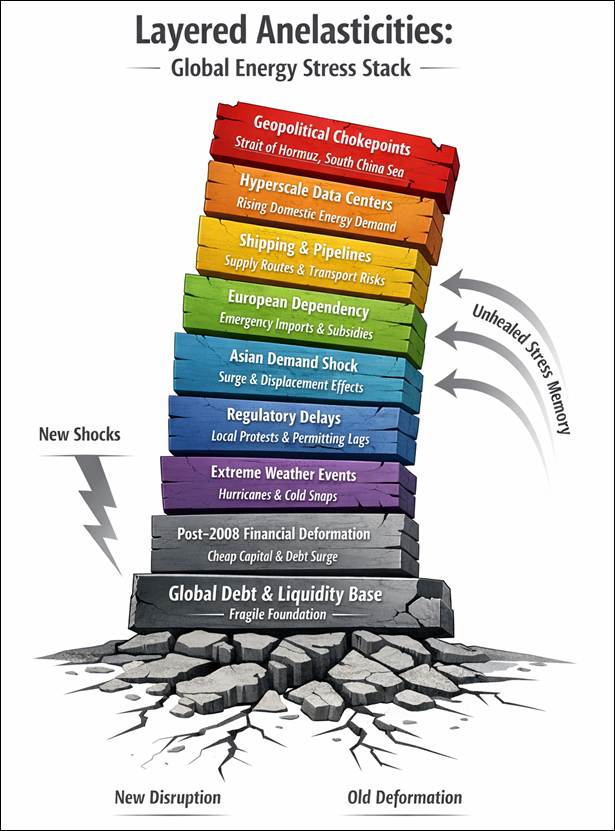
Energy & Geopolitics Newsletter — 17 May 2026
The past weeks showed a clear pattern across articles and interviews. The global oil and gas system has moved into structural anelasticity, behaving less like a market and more like a material under pressure. The Gulf reflects this shift. Iran and Saudi Arabia keep almost all their gas at home, Qatar remains the anchor of global LNG, the UAE strengthens its hub position, Oman directs volumes to industry, Kuwait stays short. Every move creates friction. Nothing resets.
The past forty‑eight hours only reinforced this geometry. Freight spreads widened again as Red Sea rerouting became semi‑permanent, not exceptional, and the system absorbed the cost without releasing it. The boomerang effect is visible: each workaround returns as a new constraint, feeding back into insurance, vessel allocation and European procurement.
The United States and Qatar face the same pressure. US LNG capacity grows but domestic demand absorbs much of it, a trend strengthened this week by higher gas burn for early‑season heat and data‑center load. Qatar deals with aging infrastructure and slower maintenance, a point underscored by fresh indications of upstream delays. Both operate inside rigid corridors where flexibility is limited and where every adjustment rebounds through the system.
Europe turns south and west, relying on Mediterranean and Atlantic routes whose importance was confirmed again as more cargoes shifted around Africa. The Iran conflict and the Red Sea crisis exposed the weight of the chokepoints, Hormuz, Bab el‑Mandeb, Suez, Gibraltar, the Danish Straits, and even the absence of escalation, for now, acts as pressure, locking in the expectation that the system will not relax.
A second trend is emerging. Energy systems adapt through modular and dispersed designs. Infrastructure becomes movable, redundant, able to operate under stress. Capital rewards optionality and avoids single routes. Resilience becomes strategy.
Across all analyses, one conclusion stands out. Each shock leaves a mark. Each adjustment narrows the next. The boomerang effect ensures that every attempt to relieve pressure returns as a new constraint. Stability comes from managing pressure, not from expecting a return to equilibrium.
Recent Publications and Media
https://moderndiplomacy.eu/2026/05/08/rigid-margins-rising-pressures-the-new-gulf-gas-order/
https://www.amphorenergy.com/recent-articles-and-media/in-the-news-1
https://mdbriefing.substack.com/p/how-the-iran-war-has-impacted-middle
Hashtags
#EnergyGeopolitics #GasMarkets #GulfEnergy #Anelasticity #LNG #EnergySecurity #Chokepoints #AmphoreEnergy