Offshore Exploration South of Crete: Greece Moves from Hesitation to Strategic Discipline
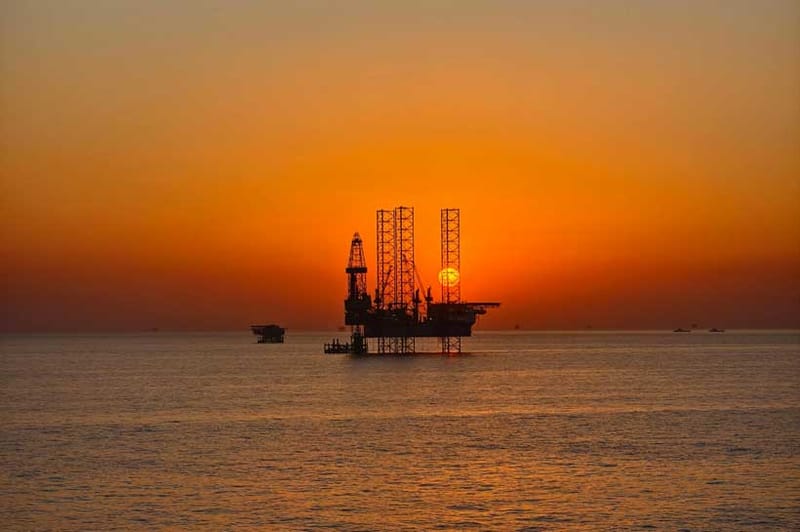
The offshore blocks south and west of Crete were structured and evaluated by the Hellenic Hydrocarbon Resources Management Authority (today HEREMA) as a unified geological system. This work took place during a period when Greece invested heavily in rebuilding its hydrocarbons authority, modernizing its regulatory framework, and presenting its geological potential to international companies and institutions. These efforts created the technical and legal foundation that allows exploration to proceed today. It also highlights the need to insulate exploration decisions from political pressures that often distort them.
This is not new. Greece’s offshore history has been marked by cycles of enthusiasm followed by inertia. Early drilling in the Ionian Sea in the late 1970s raised expectations that were never followed through. The 1990s brought renewed interest, but administrative fragmentation and regional tensions prevented continuity. Even after major gas discoveries in Israel, Cyprus, and Egypt reshaped the Eastern Mediterranean after 2010, Greece remained cautious, often prioritizing diplomatic considerations over geological opportunity.
A pivotal moment came in 2021, when TotalEnergies withdrew from the offshore blocks west of Crete and in the Ionian Sea, soon followed by Repsol. These decisions reflected portfolio strategy, not Greek geology. International energy companies operate under a simple rule: they must replace the molecules they sell. When a basin no longer fits their replacement strategy, they exit. At the same time, Greece adopted an assertively “green” political direction, which HEREMA also embraced. The combination of corporate withdrawals and political repositioning led to a broad slowdown in offshore activity and the near‑complete suspension of onshore exploration.
Exploration is now viewed as a source of geological knowledge and as a potential investment component of the emerging LNG corridor toward Eastern Europe and the Balkans. The timing is not accidental: the Greek Corridor is advancing, U.S. interest in North Africa’s vast gas resources is intensifying, and the western extensions of the deep Herodotus Basin, long considered a theoretical advantage, suddenly acquire urgent operational relevance.
This strategic shift was also enabled by broader geopolitical realignments. Without the change of governance in the United States and Europe’s subsequent alignment with Washington’s energy-security priorities, it is far from certain that this evolution would have unfolded with the same momentum. The renewed transatlantic focus on diversification, LNG corridors, and North African gas resources created the conditions for Greece’s offshore agenda to re‑emerge with new urgency.
For once, cause and effect align with clarity.
Modern Diplomacy / Energy, Tuesday, February 18, 2026