Offshore Research South of Crete
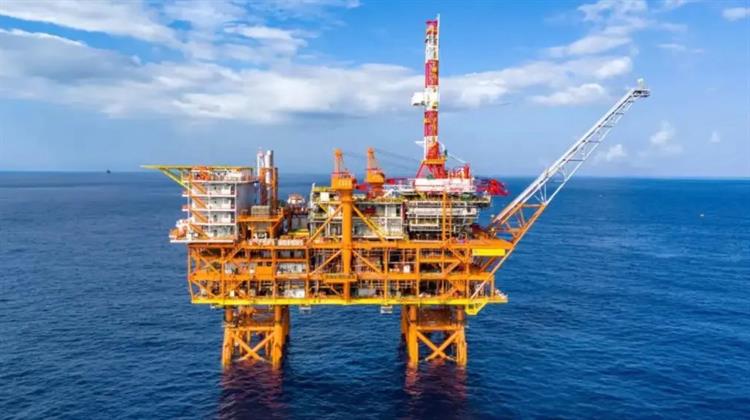
This project was carried out between 2017 and 2019, during a period in which Greece invested significantly in the restructuring of its competent authority, modernizing the regulatory framework, and promoting its geological potential to international companies and institutions. These efforts created the technical and legal foundation that now allows research to progress, and highlight the need to shield decisions from political pressures that often distort them.
The participation of yet another major international company alongside Greek entities confirms that Greece's deep waters continue to attract serious interest. This renewed engagement did not come about by chance; it reflects the stable geological profile of the Herodotus Basin and the reliability of the Greek regulatory framework. Participation at this stage is no guarantee of future production, but it does show that the data justify the risk limits required by high-risk exploration. International companies do not commit capital based on emotion, but when the subsoil, governance, and regional environment are aligned.
A clear distinction must always be maintained between exploration and production. Exploration reduces uncertainty; it does not prejudge extraction or justify premature narratives about future revenues. Confusing the two creates unrealistic expectations and undermines public confidence. A responsible national strategy must be based on facts, not wishes. Exploration generates knowledge, knowledge shapes policy, and policy must remain adaptable to national priorities and the rapidly changing international environment.
Without the change of administration in the United States and Europe's subsequent alignment with US energy security priorities, it is doubtful whether this development would have had the same intensity. The new US administration reinstated a coherent transatlantic framework that placed diversification, the expansion of LNG corridors, and partnerships with North Africa at the heart of Western energy planning. Europe, facing its own supply vulnerabilities, adopted these priorities with unusual speed and consistency. Some Central and Eastern European countries expressed reservations about the scale of the Greek Corridor, while the European Commission initially viewed the size of the required investments with caution. but these concerns, while economically valid, remain largely manageable.
Energia.Gr - Articles / Analysis - Tuesday, February 17, 2026
Authors: Yannis Bassias
Υπεράκτιες Έρευνες Νότια της Κρήτης: Από την Επιφύλαξη στη Στρατηγική Πειθαρχία