Ormuz in the New Era of Asian Demand
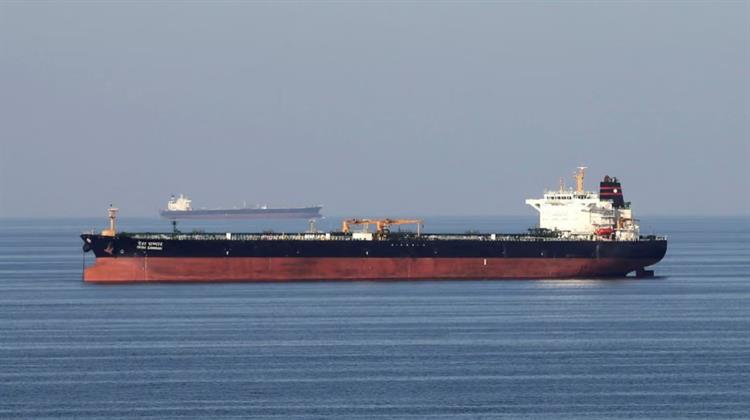
Debates on the Strait of Hormuz require clarity and strategic perspective. It is the only chokepoint where China’s energy security depends directly on US naval power, creating a lasting structural asymmetry. Global energy flows pass through several critical sea lanes: Suez (4.8 mb/d), Bab al‑Mandeb (6 mb/d), Malacca (16 mb/d), and the Turkish Straits (3.7 mb/d). Hormuz, however, is unique: it carries the largest volumes under the highest geopolitical tension. In 2024, around 20 mb/d, nearly 20% of global consumption, transited the strait. With only 2.6 mb/d of pipeline bypass capacity, 85% of flows have no alternative route.
Geography amplifies vulnerability. At its narrowest, Hormuz is 39 km wide, with two 3‑km shipping lanes. Traffic is dense, predictable, and exposed. Even without a blockade, rising tension disrupts markets: Brent jumped from $69 to $74 in a day, later reaching $92.69, while WTI briefly exceeded $100. Insurance premiums soared to $1–2 million per voyage for large tankers, halting traffic and creating a self‑imposed blockade. Rerouting VLCCs adds 2,000–3,000 nautical miles and $3–5 million per trip. In a market where a 1–2 mb/d shift moves prices by 10–15%, the risk of losing 20 mb/d triggers panic.
Asia as the exposed core
Hormuz is overwhelmingly an Asian artery: in 2024, 84% of crude and 83% of LNG flows were destined for Asia. China, India, Japan, and South Korea absorbed 69% of crude flows, with China alone taking 22–24% of oil and 10–15% of LNG. China’s dependence is structural: it imports 11–12 mb/d (13.18 mb/d in December 2025) and operates the world’s largest refining system at 18 mb/d. A growing share comes from discounted Iranian and Venezuelan barrels, which together supply over 10% of Chinese consumption. Yet these flows are fragile, Venezuela depends on US tolerance, and Iran depends on the stability of Hormuz. Iran’s vast reserves, 32–34 tcm of gas and top‑tier oil volumes, give it long‑term leverage. Its 1.1–1.4 mb/d of exports to China (plus 400–600 kb/d from Venezuela) underpin Beijing’s refining margins and help cushion Middle Eastern instability, but they also deepen China’s exposure to a chokepoint it cannot secure.
US naval power as economic leverage
The US Navy underpins Gulf security, but its role extends beyond protecting allies. It sustains a global order in which Washington guarantees energy flows while China lacks bases, alliances, or blue‑water capabilities to do the same. Control of chokepoints becomes geo‑economic power. Iran, meanwhile, uses the threat and the disruption as deterrence: raising premiums, slowing traffic, and influencing prices.
The chain of consequences
Conflict raises risk; risk raises premiums; premiums slow shipping; slowed shipping tightens supply; prices rise; Asian importers absorb the shock; China’s vulnerability is exposed; US naval dominance is reinforced; Iran’s deterrent signal strengthens; and US‑China rivalry intensifies around the same bottleneck. Hormuz is simultaneously an economic artery, a geopolitical pressure point, and a strategic vulnerability. It shapes global prices, anchors Iran’s influence, reinforces US maritime power, and highlights China’s structural dependence. In this narrow strait, energy flows become a direct measure of power.
Energia.Gr - Analyses - Monday, March 9, 2026
Author: Yannis Bassias
Το Ορμούζ στη Νέα Εποχή της Ασιατικής Ζήτησης