Strategic Integration of Ionian Upstream Assets into the Adriatic Energy Grid: Securing the Southern Flank
Active Downstream Integration and Cross‑Border Infrastructure Interconnections
The Adriatic already functions as a fully developed downstream ecosystem, capable of absorbing a new gas province emerging in the Ionian Sea. Production from Greece’s Block 2 will not require isolated, capital‑intensive infrastructure. Instead, it can plug directly into an established network linking Italy, Albania, Greece, and North Africa, forming a unified Ionian–Adriatic energy corridor where geology, extraction, and transport operate as a continuous loop. This South–North axis offers Europe one of the few realistic pathways for rapid energy reinforcement without the burden of new multibillion‑dollar megaprojects.
Crucially, this cross‑border geological continuity is mirrored by corporate continuity. Energean, following its acquisition of Edison E&P, holds a dominant position on the Italian side. It operates the Rospo Mare field with a 100% working interest and partners with Eni across adjacent Adriatic concessions. This places the company in a unique position as the industrial bridge, a producer on the mature Italian shelf and the active exploration operator in Greece’s Block 2.
Albania, though smaller in scale, provides essential supporting infrastructure through the Ballsh refinery, the facilities at Fier, and the port of Vlora. Vlora already handles major petroleum cargoes and is well positioned to evolve into a future LNG hub, creating an Eastern infrastructure chain that complements the Italian networks.
The presence of the Trans‑Adriatic Pipeline further strengthens this corridor. TAP is not merely a conduit for Caspian gas; it is a fully bidirectional system capable of reverse‑flowing gas from Italy back into the Balkans and Greece. Its proximity to Block 2 means future Ionian production can enter the continental grid immediately, avoiding the need for new mega‑pipelines.
Southern Italy acts as a major Western gas hub, importing large volumes from Libya via Greenstream and from Algeria via TransMed. These pipelines terminate precisely where the Italian carbonate blocks are located, creating a strategic energy triangle where North African imports, Italian Adriatic production, and potential Greek Ionian production converge. Italy’s LNG terminals, storage fields, and trunklines can absorb new volumes without delay.
Capital Expenditure Realities and Deepwater Infrastructure Economics
The financial scale of deepwater exploration becomes clear when examining the cost of the drill bit alone. Even in moderate water depths, a high‑pressure carbonate exploration well such as Asopos‑1 in Block 2 is expected to cost $65–100 million. Ultra‑deepwater frontiers elsewhere can double that figure.
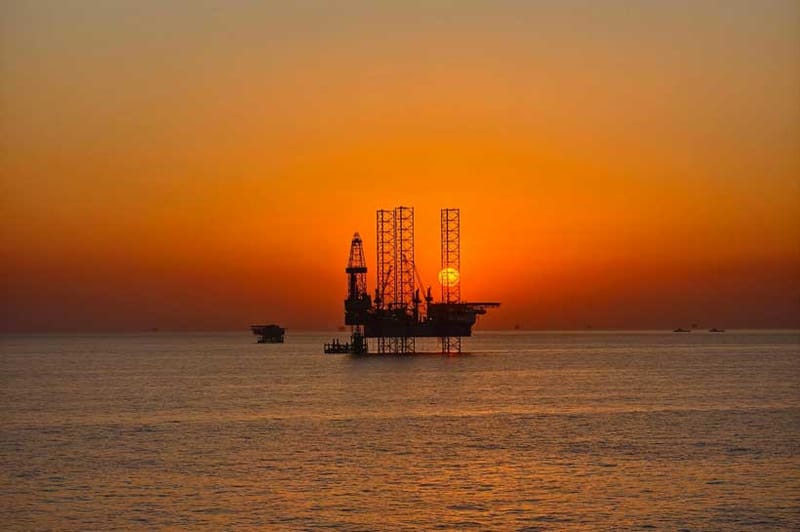
The decisive factor in turning a discovery into a producing asset is the deployment of complex, multi‑billion‑dollar infrastructure: deepwater subsea production trees, long‑distance export pipelines, offshore processing or compression units, and, given Ionian depths, potentially FPSOs. Developing a standard deepwater gas field in the Eastern Mediterranean via an FPSO typically requires $1.5–2 billion, while anchor projects such as Israel’s Leviathan Phase 1 reached $3.6–4 billion.
Although the Ionian–Adriatic region still requires substantial capital expenditure, its existing infrastructure footprint dramatically lowers the barrier to entry. The decisive step is building the systems that connect deepwater reservoirs to the European market. Ultimately, molecules in the ground have zero economic value. Value is unlocked only when infrastructure bridges the deepwater reservoirs of the Ionian and Adriatic to Europe’s energy system.
Modern Diplomacy / Energy Geopolitics, Wednesday, May 27, 2026