The Continent That Believed Geopolitics Had Ended
Europe’s strategic miscalculation rested on three assumptions. The first was that Russia would remain a reliable supplier because it needed the revenue. This ignored the long historical record of energy being used as an instrument of coercion and underestimated the degree to which Moscow viewed pipelines not as commercial assets but as levers of influence. The second assumption was that the global LNG market would always work in Europe’s favor, that cargoes would be plentiful, prices would remain low, and maritime routes would stay secure. Policymakers treated LNG as a frictionless commodity, not as a globally contested resource shaped by Asian demand, Gulf instability, and the vulnerabilities of sea lanes. The third assumption was that Europe’s own hydrocarbon resources were irrelevant. Exploration was discouraged, fields were mothballed, and national subsurface potential was dismissed as outdated. The continent now finds itself with hundreds of inactive fields, a dormant endowment that once seemed unnecessary but today represents a strategic blind spot.
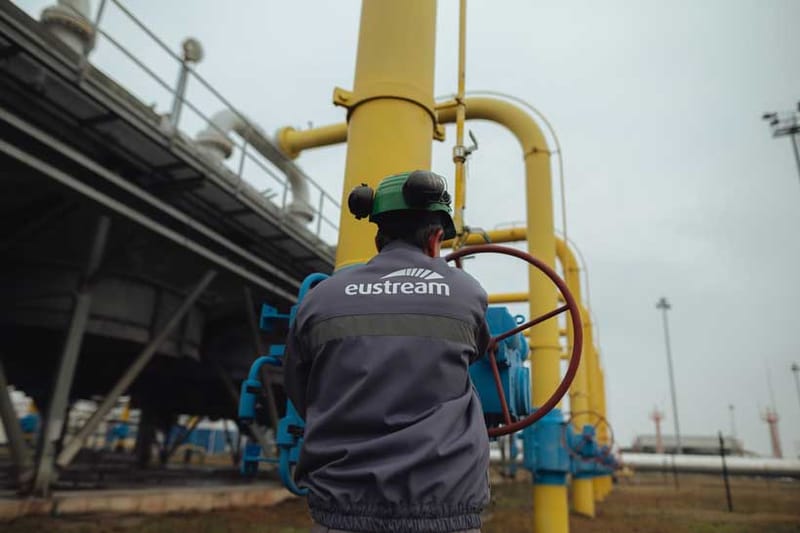
TurkStream’s significance is not measured in cubic meters but in concentration of risk. Before 2022, Europe imported 155 bcm of Russian pipeline gas annually. Today, only 10 to 15 bcm still arrive, all of it through a single corridor running from Russia to Turkey and then across Bulgaria, Serbia, and Hungary. Greece also receives modest but steady volumes through the Sidirokastro interconnection. In absolute terms, this represents only a few percentage points of European demand. In strategic terms, it is enormous. When dependence is concentrated in one corridor, vulnerability increases sharply. A disruption of even a small flow can have outsized effects on markets, storage, and political stability. The attempted sabotage in Serbia therefore resonated far beyond the Balkans. It struck at the last remaining link in a system that once spanned the continent, and it did so at a moment when Europe’s maritime lifelines are also under strain.
Europe’s energy system is now exposed to a continuous arc of pressure stretching from the Black Sea to the Eastern Mediterranean and onward to the Strait of Hormuz. In southern Russia, explosions and drone strikes have repeatedly targeted compressor stations and pipeline junctions feeding TurkStream. In the Eastern Mediterranean, survey vessels have been obstructed and offshore platforms have faced incursions. In the Baltic, critical infrastructure has been severed. In the Gulf, renewed harassment of shipping has revived the logic of the Tanker War, updated with drones, cyber disruption, and deniable actors. These events are not isolated. They form a pattern, a slow‑motion collision between energy and geopolitics in which infrastructure becomes a message and disruption becomes a tool. Europe now faces dual exposure, a land-based chokepoint in the Balkans and a maritime chokepoint in the Gulf. Diversification has not eliminated vulnerability; it has merely shifted its geography.
The fragility of Europe’s energy system is not limited to pipelines. It extends to pricing mechanisms. The Dutch TTF index, the benchmark for European gas, has become a barometer of continental stability. When storage levels fall or LNG flows tighten, the TTF reacts instantly, transmitting volatility across the entire European economy. The debate over reopening Groningen, once Europe’s largest gas field, has returned not because geology changed but because geopolitics did. Energy security is no longer a secondary concern. It is the foundation of industrial competitiveness, agricultural viability, and political cohesion. When the TTF shakes, Europe shakes.
Energy is not only electricity and heating. It is also food. Urea, the world’s most widely used nitrogen fertilizer, is produced from ammonia, which in turn is produced from natural gas. Gas accounts for most of its production cost. When gas prices spike, fertilizer plants shut down, agricultural margins collapse, and food prices rise. The crisis of 2021 and 2022 demonstrated how quickly this chain can unravel, destabilizing markets and governments alike. Energy policy is therefore not a technical matter. It is a pillar of social stability.
This brings the question of the Balkan corridors into sharp focus. The routes that carried gas from Ukraine and Turkey into the heart of Europe were once seen as diversification. Today they form a narrow and fragile system crossing states with divergent alignments, limited redundancy, and infrastructure exposed to hybrid pressure. Their capacity is modest, their political environment unstable, and their strategic value disproportionate to their physical volumes. TAP is the notable exception: it operates reliably and is set to double its delivery capacity. But TAP alone cannot offset the structural vulnerability of the wider corridor network. If Europe continues to rely on these routes as its last remaining land-based artery, they will remain a point of concentration rather than resilience. Treated instead as transitional links within a broader, more distributed architecture, they may still play a role. As they stand today, however, they are not a foundation for long‑term security. They are a reminder of how quickly diversification can become dependence when geography is ignored.
The same question now applies to the LNG corridors emerging from the south. Italy and Croatia already function as established LNG entry routes, Greece is only beginning to assume that role, and Albania remains a projected addition, all intended to feed regasified LNG into their own markets and northward into the Balkans. Their vulnerability does not arise from the Mediterranean alone but from every stage of the delivery chain, from liquefaction abroad to global shipping routes, terminals, and inland interconnectors. LNG is not a strategic shield. Its price rises sharply whenever shipping lanes face disruption, revealing the weakness of a system that still lacks sufficient terminals, storage capacity, and transmission depth. These southern LNG corridors add flexibility to Europe’s energy map, but they are not yet strategic pillars. They remain exposed to price volatility and maritime tension, rather than regional political uncertainty. They offer diversification but not insulation, and their long‑term value will depend on whether Europe builds the redundancy and infrastructure they currently lack.
Across the continent, however, national hydrocarbon registries point to an overlooked asset: Europe still holds hundreds of inactive or decommissioned fields, a dormant resource base sidelined during decades of complacency. Conservative estimates place the number above 400 to 500, with broader assessments reaching 700 to 800. These fields were not abandoned for geological reasons but because Europe assumed it no longer needed them. Re-evaluating this endowment is not a return to the past. It is a recognition that true energy independence cannot rest on fragile corridors, contested shipping lanes, or imported molecules alone. A continent that aspires to strategic autonomy must first secure the resources beneath its own feet.
Europe stands at a crossroads. It can continue behaving as if geopolitics happens elsewhere, or it can acknowledge that energy security is the foundation of every political, economic, and social system. The arc of instability surrounding Europe will not disappear. Hybrid threats will not diminish. Global LNG markets will not become more predictable. The question is not whether Europe will face further disruptions. The question is whether it will face them strategically or reactively. The age of certainty is over. The age of strategy has returned.
Modern Diplomacy / Energy, Friday, April 10, 2026
The Continent That Believed Geopolitics Had Ended - Modern Diplomacy