The Experience of Crete and the Opportunity of the Ionian
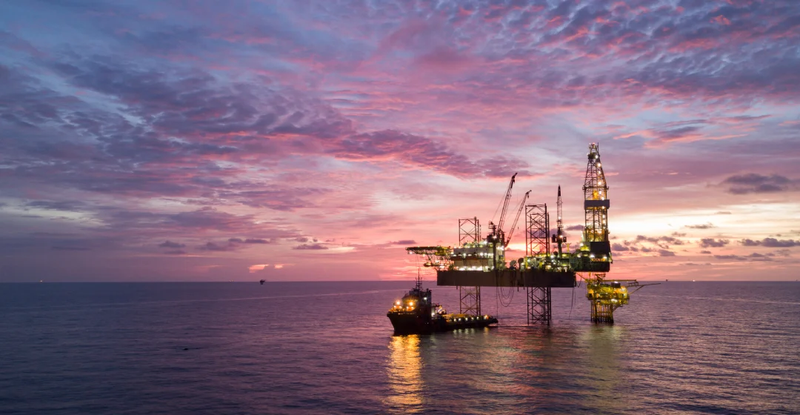
ExxonMobil’s withdrawal from the “West of Crete” block and the effective suspension of operations in the “Southwest of Crete” block are not merely technical details.
They are the clearest confirmation that Greece has let slip a window of opportunity that had been methodically opened in 2017, when EDEY was restructured as a genuine state-owned entity: technically competent, internationally credible, and capable of engaging on equal footing with major companies. As early as 2017, as reflected in its official presentations and technical papers at international conferences, EDEY had explicitly stated that hydrocarbon exploration in the country would begin in the Ionian Sea and gradually move southward. At that time, the challenges facing Crete were addressed methodically, and the country succeeded in attracting a rare tri-national investment consortium (Total – Repsol – ExxonMobil), with the relevant contracts ultimately ratified by Parliament in 2019.
And this is precisely where inelasticity comes into play—the concept that explains why Greece found itself vulnerable. The European natural gas market, after 2022, became completely inelastic: it cannot absorb major delays, it cannot wait ten years for deepwater production, and it cannot function without steady flows. In an inelastic market, costs skyrocket at the slightest shock, and that is exactly where Greece found itself.
At the same time, the long-term natural gas purchase contracts that protected the Greek market from extreme price fluctuations were undermined and gradually abandoned. Political leaders and the energy establishment were celebrating the “green transition,” but Greece was becoming completely exposed to TTF spot prices, just as Asia was setting global prices. The country was buying gas at a premium because Asian markets were absorbing available cargoes and driving up the marginal price. The 2022 energy crisis was not solely exogenous; it was also the result of misguided domestic policy choices.
In this environment of state-sanctioned amateurism, large corporations did what they always do: they trade physical volumes of energy in the form of molecules and demand their rapid replenishment. They don’t invest in narratives; they invest in the immediate production cycle. They want flow, not theory. They want projects that deliver quickly, not plans that promise production twelve years down the line. Crete, with the cost of deep drilling skyrocketing and a timeline that had now exceeded a decade, could not keep up with this industrial logic of the oil market’s major players.
And this is where the true “corridor” emerges—not as a political fantasy, but as an industrial reality. This corridor is not a theoretical map. It is a continuum of segments: from the upstream sector of the Ionian–Adriatic region, through the midstream of Italian infrastructure and pipelines, to the downstream sector of European industry.
It is precisely in this context that the Southern Ionian Sea is now the focus of genuine interest from energy giants. There, although geological depths are significant in some cases, they remain more manageable, while proximity to existing networks clearly allows for faster development times. This trend is being followed by Chevron, Helleniq Energy, and Energean in the region. This is the path that works because it relies on existing, geographically mature infrastructure. This is the path that generates value and that companies recognize. And this is the path that Greece failed to recognize in time, because it became trapped in a political narrative about Crete that had nothing to do with the harsh industrial reality.
The geo-economic significance of the Ionian and Adriatic Seas has recently been analyzed in articles I wrote for *Naftemporiki* and *Modern Diplomacy*: this is a unified axis where Greece can function as an upstream producer and Italy as a mature downstream hub. ExxonMobil is simply aligning itself with the logic of the actual corridor, rather than the political one.
Crete has not failed geologically so far. It has failed in terms of timing and politics. The window of opportunity in 2017 closed before it even opened. The question is whether the country will manage to open a new one—this time in the true corridor of the Ionian and Adriatic Seas—before international developments overtake it once again.
Naftemporiki / Opinions, Saturday, July 4, 2026
https://www.naftemporiki.gr/opinion/2133199/i-empeiria-tis-kritis-kai-i-eykairia-toy-ionioy/