The Gulf in Flux: The Emirates, Iran, and the New Regional Equation
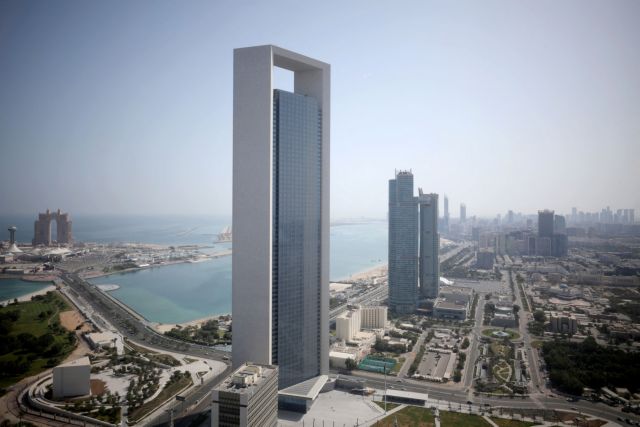
The announcement of the United Arab Emirates withdrawal from OPEC is not merely a diplomatic move; it reflects a deeper realignment of the energy system in the Gulf, where reserves, geography, and new economic chains are reshaping the balance of power. The Emirates, with approximately 111 billion barrels of oil and 8 trillion cubic meters of natural gas, possess significant excess production capacity.
Saudi Arabia, with 267 billion barrels, continues to control the marginal prices per barrel, while Qatar, with 24.7 trillion cubic meters of gas, has already emerged as an LNG superpower. Oman, with 5.4 billion barrels and 700 billion cubic meters of gas, is leveraging its unique geographic location and an outward-looking strategy to strengthen its role.
The Emirates are seeking to break free from a quota framework that no longer matches their ambitions. Their priorities now revolve around increasing production volumes, expanding market share in Asia, and positioning themselves as a hub for emerging energy products such as hydrogen, ammonia, and carbon dioxide. Their model relies on flexibility, a diversified portfolio, and the capacity to combine hydrocarbons, capital, infrastructure, and certification. This approach inevitably collides with OPEC’s structure, where Saudi Arabia continues to impose a logic of collective stabilization.
Across the region, other Gulf states are redefining their roles through distinct instruments. Saudi Arabia is pushing forward large-scale hydrogen and ammonia projects tied to NEOM (New Energy and Opportunity in the Middle East), leveraging its vast reserves and financial weight. Qatar is doubling its LNG production capacity while building an integrated offer that spans natural gas, carbon capture, and ammonia.
Oman is capitalizing on its geography outside the Strait of Hormuz, with direct access to the Arabian Sea and the Indian Ocean. This position provides export routes insulated from regional chokepoints and supports its emergence as a green hydrogen hub through the ports of Duqm, Sohar, and Salalah.
The Emirates’ withdrawal from OPEC must therefore be read as a strategic realignment rather than an isolated gesture. Abu Dhabi understands that the next phase of the global energy transformation—no longer simply an “energy transition”—will be shaped not by control over barrels but by control over standards, flows, and value chains for new molecules. Asia is absorbing nearly all incremental demand, and the maritime corridors stretching from the Strait of Hormuz to the Arabian Sea are becoming decisive.
A new layer of competition with the United States is also taking shape. The American model, built on LNG flexibility and rapid market expansion, contrasts with the Gulf’s ambition to become the central platform for emerging energy chains. Washington seeks to maintain influence from the Eastern Mediterranean to the Indian Ocean, secure outlets for its LNG, and impose technological norms. The Gulf states, by contrast, aim to define their own standards, dominate critical infrastructure, and lock in long-term Asian demand.
Within this evolving landscape, the prospect of limited, functional cooperation with a reformed Iran cannot be dismissed over the long term. Iran holds 157 billion barrels of oil, 34 trillion cubic meters of natural gas, and substantial mineral resources. A future normalization, if political conditions allow, could generate synergies with Oman, Qatar, and the Emirates, particularly along corridors bypassing the Strait of Hormuz and in natural gas, hydrogen, and ammonia value chains. This remains a distant scenario, but it is already factored into long-term planning.
The Emirates’ decision thus marks one of the first visible signs of a shifting energy center of gravity. The Gulf is seeking to elevate its role, compete with the United States in new technologies, and shape the flows and standards that will define the next energy era.
Οικονομικός Ταχυδρόμος / Experts, Wednesday, April 29, 2026