The Ionian-Adriatic Corridor: When Geology Gains Momentum Through Infrastructure
The geological context
The pre‑Apulian carbonate ridge stretches from Italy’s Adriatic into Greece’s Ionian Sea, forming a continuous deepwater carbonate system 900–1,600 m thick with strong fracturing and a southeast‑deepening maturity trend. In Italy, the ridge stays shallow enough to remain in the oil window, supporting fields like Rospo Mare and Aquila, largely operated by Eni. Farther southeast, the ridge drops into the Greek EEZ, reaching 4,000–5,000 m where 150–170°C temperatures and 12,000–14,000 psi pressures push the system into the condensate and dry‑gas windows. This creates a dual petroleum system: Italy holds the updip, oil‑prone segment, while Greece contains the downdip, gas‑ and condensate‑prone frontier now being explored by ExxonMobil, Energean, and Helleniq Energy.
Market Paralysis, Regulatory Headwinds, and Past Consortium Disruption
While this dual model geology had been recognized within HEREMA’s strategic framework since 2018, the critical operational transition from regional 2D mapping to high resolution 3D seismic acquisition stalled. The abrupt exits of Total and Repsol from the Ionian Sea fundamentally disrupted the project’s momentum. This operational freeze was compounded by a tightening global capital market, as rigid ESG, driven investment mandates, rapidly depleted the funding pool for frontier fossil fuel exploration. Observing this cascading exit of European majors, a complete lack of fresh data, and the steep technical risks inherent to the ultra, deep carbonate plays, ExxonMobil strategically derisked its portfolio. The company slowed its deployment in the highly demanding blocks west and southwest of Crete. The confluence of these factors resulted in a prolonged period of stagnation. During this time, Greece’s immense geological upside remained entirely untested, leaving its most valuable geopolitical asset, its proximity to mature ready to plug European infrastructure, deeply underutilized.
With Europe facing an urgent mandate to secure non-Russian gas, the deep carbonate ridge of the Ionian Sea underwent a major shift. The formation evolved from a perceived environmental liability into an indispensable strategic asset. This momentum was further accelerated by the shift in the U.S. administration in 2024. The refined American energy policy placed a heavy emphasis on bolstering European diversification via regional gas and liquefied natural gas hubs. This alignment provided both the technical legitimacy and political air cover necessary to advance Block 2. Ultimately, it dismantled the regulatory and political headwinds that had frustrated earlier investors. The region transitioned from a period of paralysis into a highly synchronized phase where geology, geopolitics, and continental energy security aligned.
When Infrastructure Turns Geology into Power
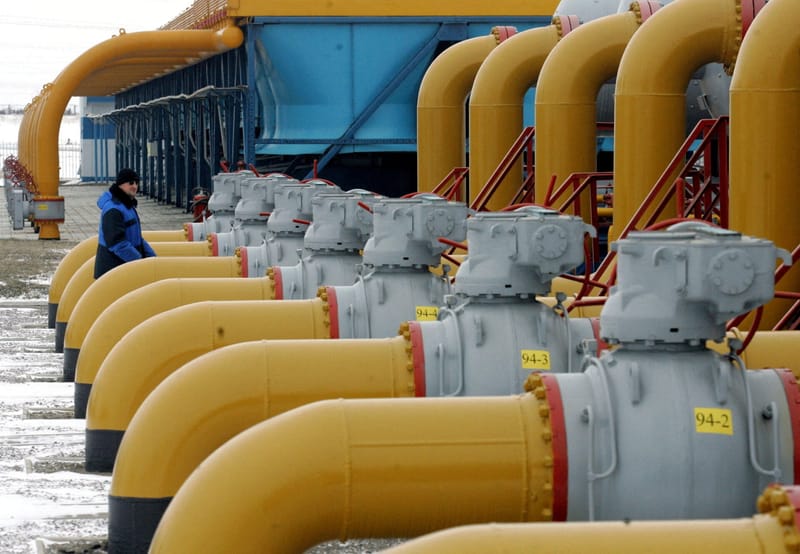
The existence of this entire Adriatic ecosystem turns the region into a mature downstream environment. It is ready to absorb the emergence of a new gas province in the Ionian Sea. Production from Block 2 in Greece will not need to develop expensive infrastructure in isolation. It will simply plug into an established network linking Italy, Albania, Greece, and North Africa. This forms a unified Ionian, Adriatic energy corridor where geology, extraction, and transport operate as a continuous loop. Ultimately, this South to North transit axis offers Europe one of its few realistic pathways for rapid energy reinforcement without the burden of colossal new capital investments.
Naftemporiki / Opinions, Tuesday, May 26, 2026