The resilience of the energy market in the midst of a global crisis
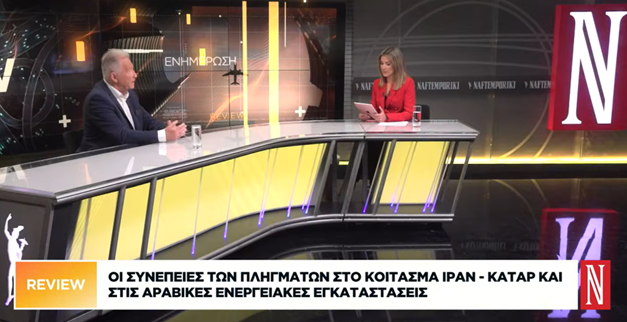
The interview explored the fragility of Europe’s energy posture, the geopolitical constraints shaping global supply, and the emerging structural pressures inside the United States, particularly the surge in domestic gas demand driven by the rapid expansion of data center infrastructure.
The discussion opened with Europe’s persistent strategic blind spots. Energy continues to be treated primarily as a regulatory or market exercise rather than a geopolitical one, leaving the continent exposed to shocks. A lack of redundancy, overreliance on single suppliers, and slow institutional reflexes have created a system that reacts to crises rather than anticipating them. Attention was turned to Europe’s growing dependence on LNG. While this shift has increased flexibility, it has also deepened vulnerability. Europe now competes directly with Asia for cargoes, embedding structural price volatility into its energy system and reducing its ability to plan with confidence.
A central part of the conversation focused on the internal pressures building within the United States, often perceived externally as an inexhaustible LNG supplier. Domestic gas demand is rising sharply, with projections indicating that the country may require an additional ~100 bcm of natural gas by 2030 simply to meet internal consumption. At the same time, hyperscale data centers, driven by AI, cloud computing, and digital infrastructure, are becoming major energy consumers. Their electricity needs indirectly increase gas fired power generation, tightening the balance between domestic requirements and export capacity. As a result, US LNG exports will increasingly compete with US internal needs, narrowing the margin available to Europe during periods of stress.
This tightening is compounded by the structural fragility of the US LNG system itself. The supply chain depends on a long inland spine: gas must travel thousands of kilometers from shale basins to coastal liquefaction terminals, crossing multiple jurisdictions and exposure points. Weather events, regulatory delays, pipeline bottlenecks, and local opposition can disrupt flows at any stage. The additional load created by data center energy consumption adds further strain, making the system more brittle than Europe typically assumes.
The conversation also highlighted the vulnerability of global maritime chokepoints, Hormuz, Bab el Mandeb, the Turkish Straits, where disruptions propagate instantly into European markets. Europe has not built the buffers or alternative routes needed to absorb such shocks, leaving it structurally exposed to geopolitical turbulence.
The Eastern Mediterranean was presented as a missed opportunity. Despite significant potential to diversify supply and reduce exposure to global volatility, political hesitation and insufficient infrastructure investment have delayed projects that could strengthen Europe’s energy autonomy.
The interview concluded with a reflection on energy system hysteresis. Crises do not simply pass; they leave lasting distortions in prices, supply chains, and political alignments. Each shock accumulates, creating a deeper structural fragility that policymakers consistently underestimate.
Naftemporiki TV / REVIEW, Saturday, March 21, 2026
Πολύ άσχημες οι ενεργειακές επιπτώσεις για Ιράν και Κατάρ, ωφελημένες οι ΗΠΑ - YouTube