The restructuring of the European energy system under the pressure of war
The end of Russian transit on December 31, 2024 reshaped European flows. LNG volumes were redirected to the south-north axes, via Italy and the Adriatic, but also via Poland, which actively supports Ukraine thanks to Norwegian gas from the Baltic Pipe. This realignment prevented an immediate crisis, but highlighted the gaps in a still incomplete system. In this new environment, Ukraine is losing an important geopolitical tool and a critical source of revenue, and now has to pay for gas transit without any economic benefit. Slovakia sees its historic role as a transit country disappearing, while Hungary maintains its energy ties with Moscow, at the risk of political isolation within the EU. The Greek corridor, which is likely to become a Mediterranean pillar thanks to future domestic sources in the Eastern Mediterranean, remains limited, with a capacity of less than 15 bcm, and does not meet the immediate needs of Central Europe and Ukraine.
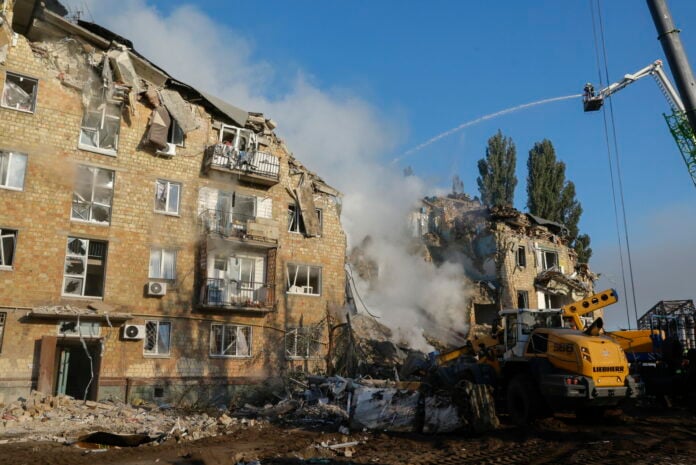
The new situation is putting more pressure on Ukrainian storage facilities, which are becoming more strategic but also harder to use. The transit shutdown is depriving Kyiv of the steady flow of natural gas that naturally fed the underground facilities. Ukraine now has to import gas via longer, more expensive, and more vulnerable routes, while repeated attacks are weakening the technical integrity of the system. The storage facilities, among the largest in Europe, served as a key stabilizer, but their use is becoming increasingly difficult due to risks and uncertainty. European operators are reluctant to store volumes in Ukraine despite attractive tariffs, as physical and regulatory risks have increased. This reluctance reduces Kiev's ability to fill its storage facilities at a time when Europe needs flexibility to stabilize its markets. Fiscal constraints and increased competition are limiting Ukrainian markets, turning a pillar of stability into a source of uncertainty.
Hungary and Slovakia remain among the member states most dependent on Russian gas. Although they belong to a European Union that seeks to reduce this dependence and support Ukraine, they continue to promote supply schemes linked to Moscow, causing friction with Kiev and Brussels. Overall, the EU finds itself in the role of referee without its own energy resources. It must ensure the supply of landlocked states, support Ukraine in the war, and maintain the political cohesion of a fragmented whole. As long as the European energy transition remains incomplete, any change in flows or bilateral disagreement could escalate into a pan-European crisis. The new South-North axes, Polish interconnections with Norwegian gas, and future Mediterranean corridors are not yet sufficient to compensate for the loss of historic transit.
Europe must accelerate investment, diversify routes, and strengthen its domestic capabilities. A more resilient electricity grid, capable of preventing blackouts and operating at higher voltages, will reduce the need for imported gas. Only true energy autonomy, based on a modern electricity system, next-generation technologies with advanced storage, low-carbon molecular solutions, and emerging Mediterranean resources can provide Europe with the long-term resilience it needs.
NAFTEMPORIKI / OPINIONS, Sunday, February 22, 2026
Η αναδιάταξη του ευρωπαϊκού ενεργειακού συστήματος υπό την πίεση του πολέμου