Western Macedonia and the Question of the Nuclear Restart
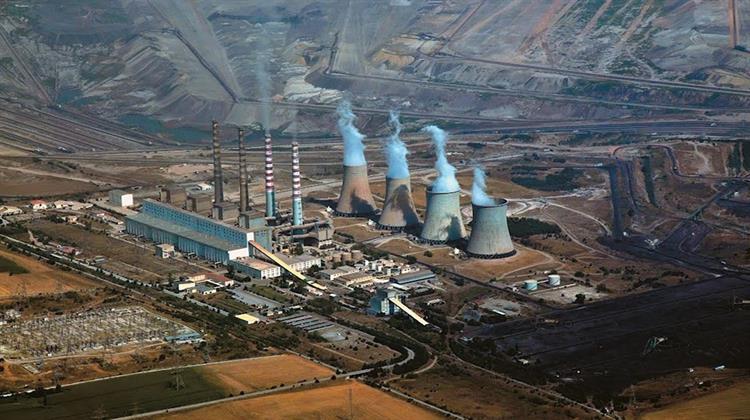
The shift to solar and wind power—which operate only when conditions are ideal and lack supporting industries—has left a gap that has not been filled by new productive activities. It is in this gap that the prospect of SMRs emerges, not as a technological gimmick but as a potential tool for reindustrialization and stabilization of the local economy.
The idea of an SMR is based on three realities. The region has a robust electrical infrastructure with high-voltage lines, substations, and industrial sites that allow for direct connection. It also has a workforce trained for decades in the operation of thermal power plants, capable of transitioning to nuclear professions. Finally, it is at the heart of Europe’s just transition, with preferential access to funding for lignite-producing regions. Thus, the SMR is not a certainty but a reasonable question as to whether the region can once again become a controlled energy hub, complementary to renewable energy sources that have reached saturation.The reality in Greece, however, calls for a second look, because developing an SMR takes 12 to 15 years. This creates the risk that it will serve as a vehicle for absorbing European funds rather than as a direct tool for energy security. This does not mean rejecting the nuclear option, but rather acknowledging that its implementation in Greece is slow, institutionally cumbersome, and politically vulnerable. In this context, the discussion cannot ignore a parallel option that is more mature and time-compatible: the development of domestic hydrocarbons as a medium-term source of controllable power, as well as the acceleration of hydroelectric projects that enhance the stability and storage capacity of the system. A comparison with international examples confirms that the time and cost horizons of the Greek case are not an exception but are fully in line with global standards for the development of offshore deposits. In practice, the indicative cost of first production in the Ionian Sea, from exploratory drilling to initial field development, amounts to approximately 1.5 billion euros, with first production expected in 5–7 years—half the time required for a first nuclear reactor. These figures are fully consistent with international examples: in Norway, most new offshore fields require €1–3 billion and 6–7 years; in Israel, Tamar and Leviathan were developed for $3–3.5 billion over 5–6 years; in Cyprus, Aphrodite is estimated at $3–4 billion over 6–7 years, while in Croatia and Italy, at the new Adriatic hubs, they range from €1–2 billion over 5–6 years. Even in the U.S., the medium-sized offshore fields in the Gulf of Mexico require $1–2 billion and 5–7 years. The economic footprint of the Ionian Sea is therefore fully in line with international standards and comparable to the country’s major energy projects.
The comparison with pumped-storage projects is revealing. Projects such as Amfilochia and Chandria require 1 to 1.5 billion euros and 8 to 10 years to complete, but they cannot cover continuous load. They are useful but not sufficient to stabilize a system with such high renewable energy penetration. The country consumes 6.5 bcm of natural gas and 55 to 60 TWh of electricity annually, which equates to an average capacity of 6 to 7 GW. It does not need tens of gigawatts of controllable power, but rather a few gigawatts that are stable. The ability to cover part of consumption through domestic production reduces dependence and stabilizes the system. Thus, SMRs can serve as the long-term pillar, hydrocarbons as the medium-term pillar, and renewables as the rapidly growing pillar.
It should be noted that Greece now functions as a single mainland grid thanks to a decade-long effort by ADMIE and ENTSO-E to interconnect the islands, with projects in the Cyclades, Crete, and the Ionian Islands. This reduces the utility of floating or island SMRs, which are designed for fragmented systems that Greece no longer has. In contrast, a land-based SMR in Western Macedonia is integrated into the network’s central axis, stabilizes renewable energy production in the north, attracts energy-intensive industries, and reestablishes an energy hub where the rapid phase-out of lignite has left a void.
All of this leads to the central question of energy planning: the timing and type of baseload power the country needs. The critical question is whether Greece can wait 10 to 15 years, that is, until after 2035. The answer points to a two-pronged strategy: SMRs as a long-term option for controlled power and hydrocarbons as a realistic bridge with initial production in 7 years. International experience shows that the first SMR unit requires 12 to 15 years and 3 to 6 billion euros. Greece needs baseload power before 2035, an industrial restart before another generation is lost, and a reduction in natural gas imports before dependence becomes entrenched. In this context, hydrocarbons are not a rival to SMRs but the only realistic interim pillar that can be operational within a decade.
The need for stable power becomes even more pressing due to technologies that theoretically support net-zero policies, such as hydrogen production and large-scale electrolysis systems, but in practice require high and continuous electricity consumption, often exceeding locally available renewable energy production.
At this point, the prerequisites for genuine nuclear development in Greece become apparent.
The first gap is the absence of a regulatory framework. The Greek Atomic Energy Commission operates in accordance with EURATOM and the IAEA, but its staffing is geared toward its current operations rather than the licensing of nuclear power plants. Establishing a comprehensive framework, including the site selection methodology per IAEA SSG-35, the design licensing process, environmental licensing, and public consultation, requires 5 to 7 years even under favorable conditions.
The second gap is the lack of a national strategy for fuel, waste, and decommissioning. Some SMRs use highly enriched fuel or TRISO, which produces a smaller volume but higher radioactivity and thermal output per unit volume, requiring greater cooling and special final disposal design. Decommissioning requires committed funds, as in the French model, something that does not exist in Greece. Without these, the discussion on SMRs remains at the level of intention.
The third gap is political. The country has not designated an implementing body for a nuclear program. PPC, ADMIE, the Ministry of Energy, and the Demokritos National Center for Scientific Research are involved in the issue, but none has the mandate or staffing to function as a development agency. This explains why the political declaration in Paris in 2025 and the Athens Agreements in 2026 have not been translated into an actionable program. The next step must be to designate an agency with a mandate, a budget, and a timeline, so that the nuclear option can become a reality. If Greece chooses this path, then Western Macedonia could once again become an energy hub, capable of saying: we do not just host renewable energy sources; we are once again hosting the baseload industry.
*Yannis Basias, Energy Consultant, former Chairman and CEO of the Hellenic Hydrocarbon Resources Management Company,
**George Papachristos, MSc Candidate in Law, Business, Energy Regulation and Policy, International University of Greece
ENERGIA.gr / Articles - Analyses, Thursday, May 21, 2026