When LNG becomes a global crisis accelerator
The result of this escalation is a configuration without precedent:
- potential oil shock on the scale of 1979,
- contraction affecting 20% of global LNG,
- reduced elasticity of US shale gas,
- insufficient OPEC spare capacity, and Iranian production that cannot be quickly restored.
This is an international energy system where crises do not occur sequentially but simultaneously.
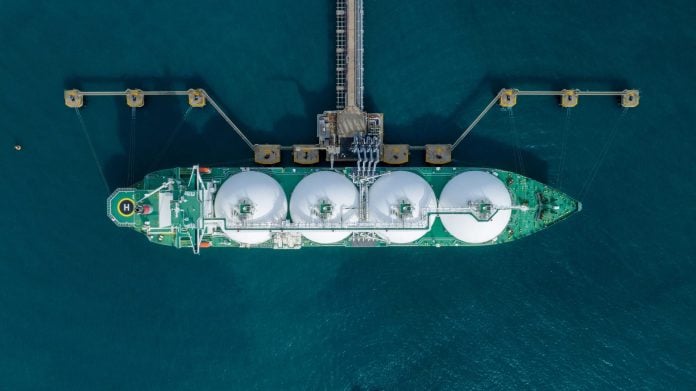
The complete shutdown of LNG production in Qatar, following Iranian attacks on the Ras Laffan and Mesaieed facilities, acted as a catalyst. Qatar has the largest single LNG export facility in the world, accounting for approximately 20% of global supply. With the completion of the North Field East & South expansions, it is expected to become the world's largest LNG exporter. Within hours, the system that supplies Europe, Asia, and international shipping was shut down.
At the same time, the Eastern Mediterranean is becoming a second front. The expansion of Leviathan to 21 bcm/year was approved to boost flows to Egypt and Jordan, but the Israeli government, under threat of Iranian attacks, requested the suspension of the platform's operation, leading Chevron to declare force majeure. The region offers potential, but remains extremely vulnerable, and the crisis confirms this.
The market reacted instantly: the TTF skyrocketed, the JKM followed suit, while Asia, tied to the price adjustment of oil, saw costs double. The physical shortage cannot be covered in the short term, as new US capacity takes 3–4 years to come online.
The link between Asian contracts and oil is making things even more unstable. With Brent at $73, the price of LNG stands at $9.26/MMBtu, rising to $15 at $120, $18.5 at $150, and $24.5 at $200. The formula is predictable, but access to consumers is not.
The Iranian response spread to US facilities in the UAE, Qatar, Bahrain, Saudi Arabia, Iraq, and Kuwait. In a world where war in Ukraine has become "normal" and the thresholds for the use of force have been lowered, the problem is not the magnitude of a shock—modern systems can withstand a shock—but the simultaneous accumulation of crises. Insurance revaluation takes place before the cargoes even start moving, capital is moved before supply changes, and shipping routes are adjusted before any physical damage occurs. Crises overlap and resilience disappears.
The US is entering the crisis with a contradictory picture: crude oil production is declining, demand is rising, and natural gas is at an all-time high. In 2024, US LNG exports reached 125 bcm, of which approximately 50 bcm went to Europe. The target of 185 bcm within the next 3–4 years remains achievable. The rise in international prices strengthens the economic viability of US shale gas. Higher prices are encouraging producers to increase production, bringing Henry Hub closer to the breakeven levels of the most expensive fields. The combination of stronger price signals and infrastructure expansion supports a steady increase in US LNG availability in the coming years, shifting the balance of power in the global market.
The energy crisis is accelerating a new geo-economic reality. India's rise in Haifa strengthens the India-Middle East-Europe axis, shifting the center of gravity of maritime routes. Europe is seeking new sources and new channels as the traditional energy security architecture is being tested.
The removal of the Iranian leadership does not automatically mean the collapse of the system. If the regime survives, the focus will shift from the military to the political, mainly in Washington, where a prolonged crisis, high energy prices, and pressure from Congress will test the viability of the strategy. The question is not whether prices will rise. The question is whether the disruption will remain limited or whether we are facing the most serious energy crisis in the last fifty years.
NAFTEMPORIKI / OPINIONS, Tuesday, March 3, 2026
Όταν το LNG γίνεται παγκόσμιος επιταχυντής κρίσεων