Who covers gas needs from Norway to the Balkans
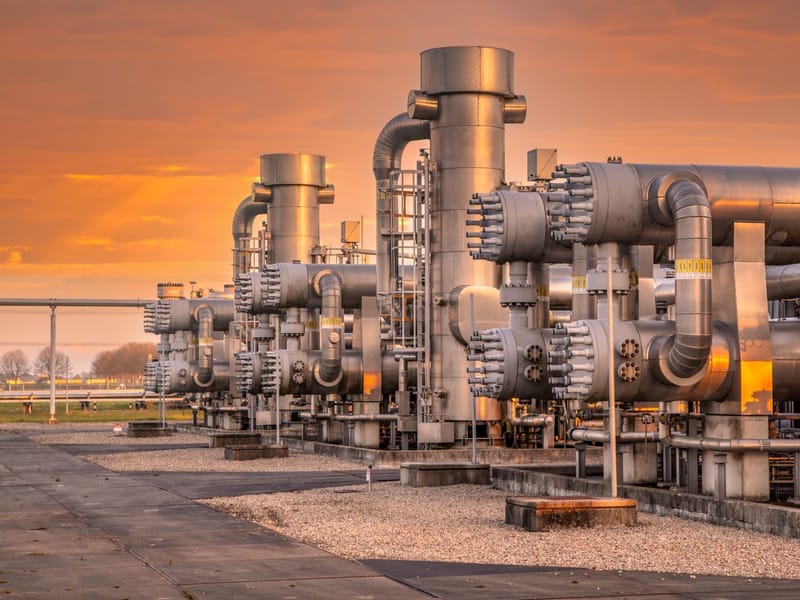
Greece, with a consumption of about 5 bcm/year, operates as a regional hub thanks to Revithoussa (7 bcm/year), the new Alexandroupolis station (5.5 bcm/year) and TAP, allowing flows to Bulgaria, Serbia and Romania. Bulgaria, with a consumption of about 3 bcm/year, is dependent on IGB (3–5 bcm/year), TurkStream and LNG imports through Greece, having almost completely reduced direct dependence on Russia.
Italy is now part of this stabilisation network. With an annual consumption of around 70 bcm, Italy draws these quantities mainly from Algeria via TransMed (22–24 bcm/year), from TAP (10 bcm/year) and from the three LNG terminals in Ravenna, Venice and La Spezia, which together add more than 20 bcm/year of capacity.
With this mix, Italy not only meets its own needs, but also acts as a transit hub, channeling up to 10 bcm/year to Central Europe through interconnections with Switzerland and Austria. Thus, it offers a third LNG entry gateway to southern Europe, next to Greece and Croatia.
This new allocation confirms that Europe, with demand remaining low and storage at high levels, does not need new LNG regasification infrastructure until 2030. The challenge is not to add new capacity, but to strengthen the existing interconnections and regional hubs from Revithoussa and Alexandroupolis, to the Krk station, the Italian LNG infrastructure and the Baltic Pipe.
NAFTEMPORIKI / ECONOMY, Tuesday, December 23, 2025
Ποιος καλύπτει τις ανάγκες φυσικού αερίου από την Νορβηγία έως τα Βαλκάνια
Republication of the article in energypress.gr, defense-point.gr, msn.gr, thesspress.gr, inewsgr.com, polispress.gr