Who is really supplying Europe with gas
Europe has entered 2025 at a level of energy security that a few years ago would have seemed unattainable. Natural gas storage exceeded 70% in January, an extremely high figure for the season, while overall demand remains about 15% lower than in previous years. This reduction is not a conjuncture but the result of a series of factors that have permanently changed the energy landscape of the continent.
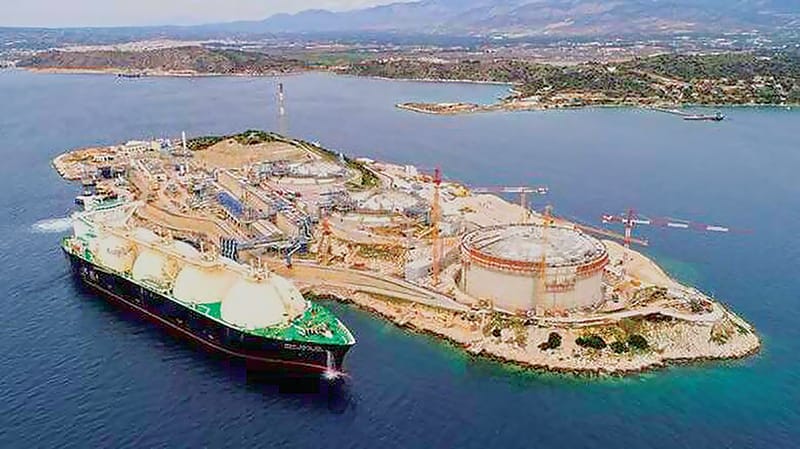
Europe's energy security is now based on a new triptych: predictable pipeline flows from Norway, LNG imports from the United States and Qatar, and regional LNG hubs that have emerged as critical gateways – Greece, Croatia and Italy. These three hubs, with their infrastructures in Revithoussa-Alexandroupolis, Krk and Ravenna-Venice, allow the redistribution of cargoes and the channeling of regasified LNG to the hinterland of Europe from the south. The shortages from Algeria and Egypt are covered through the TAP, IGB and Trans Balkan reverse flows pipelines, as well as the three regional LNG hubs.
Under these circumstances, the TTF acts as an international "signalman" for where LNG cargoes will be headed. Europe, without long-term contracts and with a high dependence on the spot market, needs to adjust the index to levels capable of competing with Asia. When Asian demand rises, the TTF follows bullish to maintain the attractiveness of the European market, with a direct impact on energy costs for households and businesses.
Ποιος τροφοδοτεί πραγµατικά την Ευρώπη µε φυσικό αέριο - KontraNews
"Κυριακάτικη Κόντρα - Έντυπη Εκδοση - Αρθρο - Ιανουάριος 4, 2026"
Yannis Bassias – Selected parts translated in English from the original article in Greek