Why does Greece export cheap solar power and import extremely expensive natural gas?
The discussion regarding Greece’s role in the energy system of Southeast Europe often devolves into overly optimistic statements that do not reflect the country’s actual structural capabilities. This distinction is crucial for formulating a realistic strategy and avoiding sending the wrong signals to the international investment community.A rigorous and balanced assessment requires greater precision.
This phenomenon is evident in the oil refining model. High exports of refined products are not a simple or self-evident activity, but the direct result of specific capital investments. Greek refineries have an extremely high Nelson Complexity Index (Nelson Complexity Index), which allows them to process “heavier” and cheaper types of crude oil, transforming them into high-value-added end products that meet the strictest international standards.
However, the critical techno-economic point remains that this production relies exclusively on imported raw materials. The country operates as an internationally competitive processor and trader rather than as an autonomous producer. Similarly, the recent positive electricity trade balance, while real, remains circumstantial and economically distorted.
This is primarily due to peak hours of domestic renewable energy production (caused by high levels of sunshine or wind), price differentials in neighboring markets, and enhanced interconnections; however, it does not constitute a structural surplus of baseload capacity. This highlights a profound accounting paradox: green energy is exported during hours when international demand and prices are at their lowest due to simultaneous overproduction in the wider region.
However, as soon as renewable energy production drops, the system is forced to rely on domestic natural gas plants, the raw material for which is entirely imported. The cost of this fuel can be many times higher than the revenue from “green” exports, with the result that the need to stabilize the system erodes accounting profits and ultimately burdens the consumer.
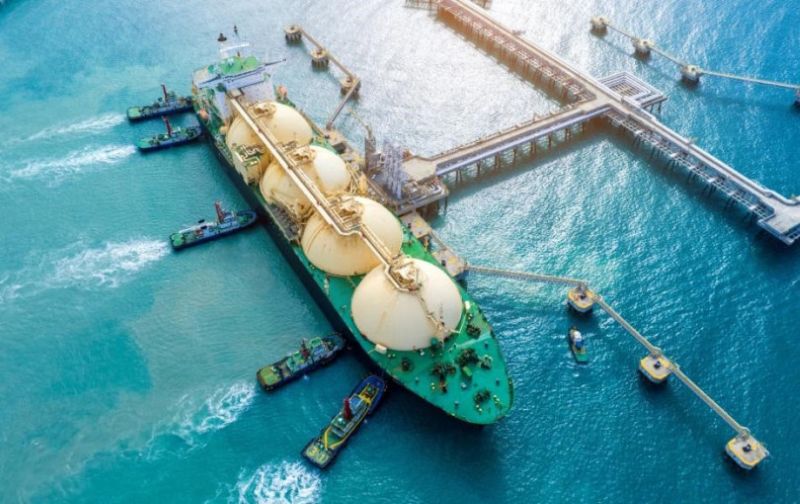
In the natural gas sector, the country’s transformation into a critical LNG hub through Revythousa and the Alexandroupolis FSRU, as part of the Vertical Corridor, undoubtedly has geopolitical significance for the security of supply in the Balkans. However, this concerns exclusively the management of flows and not primary supply, since the country functions as an energy intermediary and not as the original source of the resource.
This is also where the major infrastructure deficit lies, as public discourse is often confined to the narrative of batteries, which merely serve to balance the power grid in the short term. The country lacks large-scale strategic infrastructure, such as natural gas storage in depleted reservoirs or large pumped-storage projects, without which the security of the system remains vulnerable to international imports.
In conclusion, the picture that technocrats on both sides must recognize is clear: Greece is a regional energy hub of growing importance for electricity and LNG flows, but it lacks the characteristics—such as domestic primary production or large-scale strategic storage infrastructure—that would make it an autonomous supplier for Southeast Europe.
An accurate assessment and public acknowledgment of this role are essential prerequisites for formulating realistic policy. Only through an honest assessment of the facts, free from media “hype,” can the country safeguard its credibility on the international stage, protect its consumers, and plan the infrastructure that is truly necessary for the future.
DefencePoint / Opinions, Sunday, July 12, 2026.
https://www.defence-point.gr/giati-i-ellada-exagei-fthino-ilio-kai-eisagei-panakrivo-aerio