Anelasticity Monthly Briefing 5- European Energy Systems, September 2026
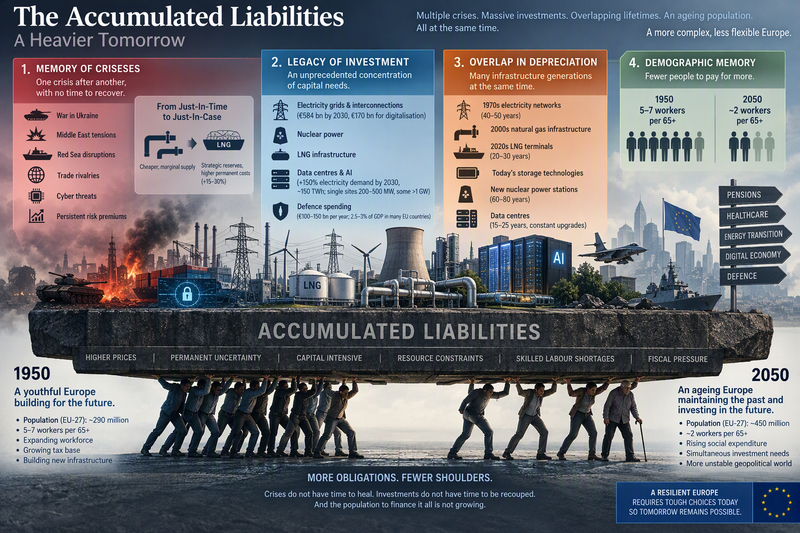
Anelasticity Montly Briefing 5 - European Energy Systems - September 2026
Layer | Key September Parameters | European Industry (EU–UK–Med–Nordics–CEE) |
Oil & Liquids | Mediterranean risk premia remained structurally elevated throughout September. Insurance costs stayed above summer averages despite periods of operational normalization. Refiners continued shifting toward shorter-haul supply chains while North Sea maintenance and logistics interruptions limited flexibility. Corridor resilience improved only marginally, revealing persistent anelasticity in crude procurement behavior. | EU Med: Italy, Greece and Spain continued diversification toward North African barrels. Germany: security-related logistics protocols remained in place, increasing transport costs. UK: North Sea production remained stable but maintenance reduced flexibility. Nordics: Norway maintained stable exports. CEE: higher import premia persisted, demonstrating limited responsiveness to changing market conditions. |
Gas & LNG | TTF remained volatile as storage, LNG arrivals, Gulf uncertainty and weather fluctuations interacted. LNG routing constraints persisted despite adequate nominal capacity. Cyprus advanced toward becoming a new East Mediterranean gas node, increasingly incorporated into procurement planning and long-term balancing models. | EU: storage close to seasonal objectives but refill economics deteriorated. UK: NBP followed TTF volatility. Med: regasification bottlenecks periodically emerged in Italy and Spain. Nordics: low LNG dependence limited exposure. CEE: pipeline-dependent systems continued experiencing corridor-risk pricing. |
Power Systems | Heat stress, congestion management and intermittent generation balancing continued to challenge European networks. Redispatch expenditures increased while flexibility investments struggled to offset structural bottlenecks. | Germany: north-south congestion remained significant. France: nuclear fleet availability improved intermittently but thermal constraints persisted. Italy: gas-fired generation continued supporting system stability. Eastern Europe: coal dispatch remained above policy expectations. Nordics: hydropower provided regional stabilization. UK: storage and battery deployment delays continued. |
Nuclear & SMRs | European nuclear programmes continued facing supply-chain and regulatory delays. SMR projects increasingly revised timelines as component logistics and certification procedures proved slower than expected. | France: licensing processes remained lengthy. Poland: development advanced but schedules remained exposed to supplier risks. Czechia: procurement uncertainty continued. UK: stable baseload performance but long-term expansion remains execution dependent. Nordics: SMR programs progressed cautiously. |
Geopolitical Corridors | East Mediterranean diplomacy gained strategic importance throughout September. Corridor diversification remained a dominant policy objective as Europe continued adapting to longer global shipping routes and increasing geopolitical fragmentation. | Greece–Italy: continued strategic alignment around interconnections. Greece–Cyprus: electricity and energy cooperation advanced conceptually. Balkans: infrastructure coordination increased. East Med: Egypt-Cyprus-Israel discussions strengthened regional positioning. CEE: corridor security remained a major concern. |
Market & Behavioral Response | Defensive procurement remained the dominant market behavior. Utilities favored security of supply over spot-market optimization. Insurance pricing, routing decisions and contracting structures continued exhibiting hysteresis characteristics. The persistence of protective behavior despite occasional normalization confirmed the presence of system-wide anelasticity. | EU: long-term contracts gained further importance. UK: hedging activity remained elevated. Med: opportunistic procurement remained limited. CEE: risk premiums continued influencing purchasing decisions. Nordics: comparatively stable procurement patterns. |
Monthly Anelasticity Assessment
Indicator | August 2026 | September 2026 | Trend |
Oil Supply Elasticity | Low | Low | → |
LNG Routing Flexibility | Low | Very Low | ↓ |
Power System Flexibility | Moderate-Low | Low | ↓ |
Nuclear Delivery Certainty | Low | Low | → |
Corridor Stability | Moderate-Low | Low | ↓ |
Insurance Hysteresis | High | Very High | ↑ |
Procurement Defensiveness | High | Very High | ↑ |
Overall European Anelasticity Index | 7.6 / 10 | 8.1 / 10 | ↑ |
September 2026 Anelasticity Conclusion
September demonstrated that European energy systems remain constrained less by physical shortages than by delayed adaptation. Supply chains functioned, but at increasing cost. Markets reacted, but slowly. Infrastructure expanded, but not fast enough to restore flexibility. The combination of corridor uncertainty, insurance persistence, regulatory delays and procurement conservatism reinforced a structural pattern in which shocks are absorbed gradually and their economic effects persist well beyond the triggering event. This remains the defining characteristic of European energy system anelasticity.