Anelasticity Weekly Briefing 1- European Energy Systems - Week ending Saturday, 25 July 2026
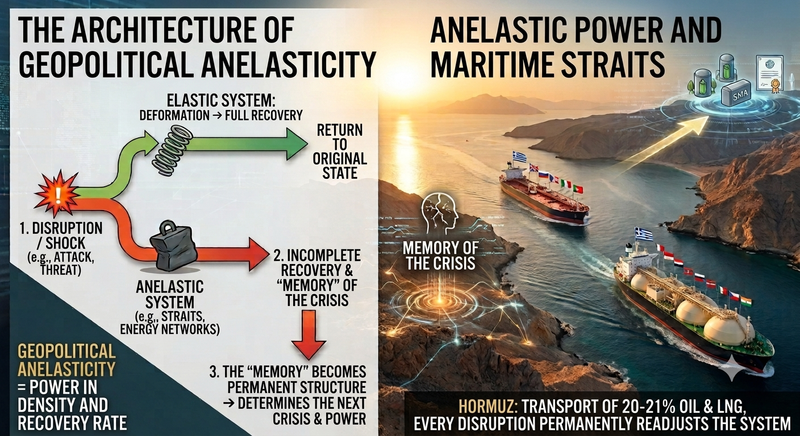
Anelasticity Weekly Briefing 1- European Energy Systems - Week ending Saturday, 25 July 2026
Layer | Key Week Parameters (Anelastic Signature) | International Industry Examples (Mon–Sat) |
Oil & Liquids | Upstream inertia persists as capital discipline outweighs tightening balances, OPEC+ signaling stays reactive rather than anticipatory, and refining rigidity continues with high margins but no new expansions. | Chevron and Exxon maintain tight capex despite elevated Brent prices; Mediterranean and Indian refiners run near capacity with no expansion signals; Aramco keeps OPEC+ guidance reactive to immediate market conditions. |
Gas & LNG | Forward curves stay elevated as seasonal refill lags, LNG timelines remain long-cycle and insensitive to short-term market conditions, and pipeline flows stay path-dependent and corridor-bounded. | TTF remains elevated as EU gas storage hovers around 53% (notably below seasonal averages), confirming curve stiffness; QatarEnergy holds North Field timelines unchanged; TAP, TurkStream, and Norwegian pipeline flows remain within established corridor constraints. |
Power Systems | The generation–grid mismatch persists as renewables respond elastically while grids remain anelastic, flexibility assets continue to lag policy targets, and capacity market premiums rise further. | Germany curtails northern wind due to regional grid bottlenecks; UK and French battery projects delay final investment decisions (FIDs) due to market volatility; Italy and Eastern Europe see rising capacity premia. |
Nuclear & SMRs | Licensing inertia continues despite political acceleration, project slippage appears structural, while Western enrichers actively execute multi-billion-euro expansions to address fuel cycle rigidity. | France’s ASN maintains a deliberate licensing cadence; Orano (Georges Besse II) and Urenco advance major long-term conversion and enrichment expansions; Poland, Czechia, and Romania report additional SMR project slippages. |
Geopolitical Corridors | The Mediterranean–Balkan corridor’s strategic value keeps rising even as commitments remain slow, East Med political momentum still outpaces physical development, and North Sea decommissioning continues despite supportive prices. | Greece–Bulgaria and Greece–Italy corridors gain political momentum without firm commitments; East Med LNG diplomacy advances without FIDs; North Sea decommissioning continues despite stable prices, confirming the sector’s structurally locked‑in downward trajectory. |
Market & Behavioral Response | Insurance premia stay elevated, rerouting costs persist across maritime and pipeline corridors, asymmetric actor incentives remain strong, and residual friction from recent shocks continues to shape behavior. | Red Sea insurance premia remain elevated; container lines maintain Cape of Good Hope rerouting; Asian buyers stay opportunistic while Europe remains cautious; post-2022 procurement friction persists across utilities and traders. |