Energy Geopolitics: The summer of 2026 that revealed the new reality
Europe is at the heart of this transformation. The prolonged period of strategic inaction that followed the end of the Cold War led to a gradual devaluation of energy security, strategic reserves and the development of domestic resources. Economic optimisation took precedence over resilience, whilst the belief that geopolitical confrontation was a thing of the past allowed for the scaling back of both defence and energy safeguards.
The war in Ukraine has highlighted the limitations of this approach, revealing that energy dependence can very quickly turn into strategic vulnerability. At the same time, it has overturned fundamental assumptions of the post-Cold War era, leading many European countries to increase military spending, strengthen the defence industry and reassess their strategic autonomy.
At the same time, the economic beneficiaries of this new reality are also coming to the fore. The defence industries and the hydrocarbons sector are attracting increased investment, as states channel more resources into defence, energy infrastructure and security of supply. Thus, geopolitical uncertainty is gradually giving way to a realignment of economic power and investment priorities.
The renewed focus on defence and energy security is a different manifestation of the same geopolitical awakening. Europe now realises that it cannot base either its security or its economic functioning on one-dimensional dependencies, and is once again placing the concept of resilience at the centre of its thinking.
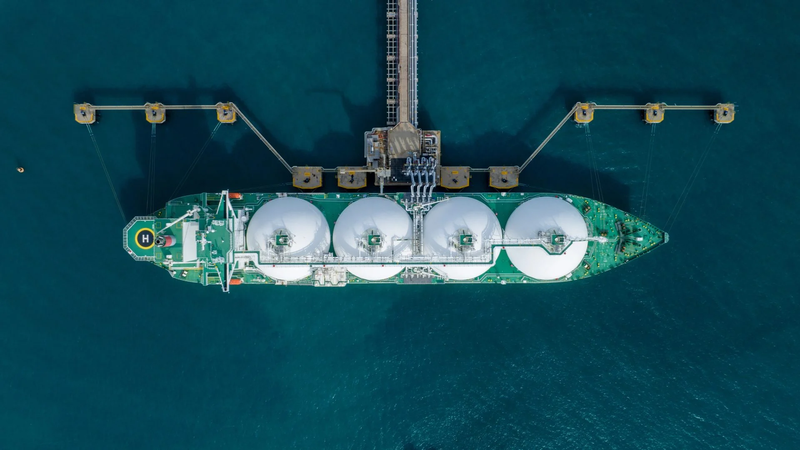
It is within this context that Europe’s energy geography is being redefined. The new gas corridors, the growing importance of LNG, the role of North Africa and the Eastern Mediterranean, and the search for more secure transport routes all demonstrate that diversification is no longer merely a commercial choice but a strategic necessity.
At the same time, tensions in the Persian Gulf, Houthi attacks in the Red Sea and disruptions to shipping have turned maritime channels into permanent hotspots of risk. The costs and risks do not disappear, but shift along supply routes, increasingly affecting the Mediterranean as well through higher freight rates, insurance premiums and the re-routing of trade flows. Crises leave a lasting mark on investment decisions, infrastructure and perceptions of risk, shaping what might be described as energy inflexibility.
In this new context, domestic resources also take on particular significance. The case of Greek Block 2, north-west of Corfu, serves as a reminder that energy security is not built solely through imports and interconnections, but also through the preservation of strategic options within Europe.
This European realignment has direct implications for Greece as well. With annual natural gas requirements of around 6 billion cubic metres, the country is called upon to pursue a balanced strategy that combines network upgrades, diversification of supply sources, responsible exploration of domestic resources and strengthening the resilience of the energy system. At the same time, it remains crucial to distinguish the geopolitical value of projects such as LNG terminals, pipelines and transit infrastructure from their direct impact on energy prices.
Such infrastructure can strengthen the country’s regional role, without, however, resulting in lower costs for consumers. The long-standing challenge remains striking a balance between affordable energy, security of supply and national strategic influence.
The need to balance these objectives also highlights a second problem: the frequent oversimplification of complex energy issues in public debate. The price of Brent is often presented as the direct determinant of fuel prices, whereas in reality it is merely one link in a far more complex chain that includes refining, transport, taxation, stockpiles and geopolitical risk premiums.
These developments point to a broader conclusion. Modern energy systems continue to be determined by fundamental parameters such as security of supply, geography, energy density, infrastructure inertia and geopolitical risks. The energy transition is progressing, but it cannot overcome these structural constraints.
From this perspective, the concept of energy inflexibility is not merely a new theoretical approach but a useful interpretative tool for understanding the new global energy order. This is an environment in which crises do not disappear but accumulate, shifting risks from the Middle East to the Mediterranean and Europe, redirecting investment and public resources, and constantly redefining the boundaries of the economy, security and geopolitical power.
Naftemporiki / Opinions, Wednesday, September 23, 2026