Energy storage: The cost of not investing
In the energy sector, there are no free options. Every decision entails costs and benefits, whilst every failure to act also entails costs and benefits. For this reason, the debate on electricity storage in Greece cannot be limited to the question of how much the batteries would have cost had they been installed earlier. It must also consider how much their absence has cost the electricity system, the economy and, ultimately, the consumer.
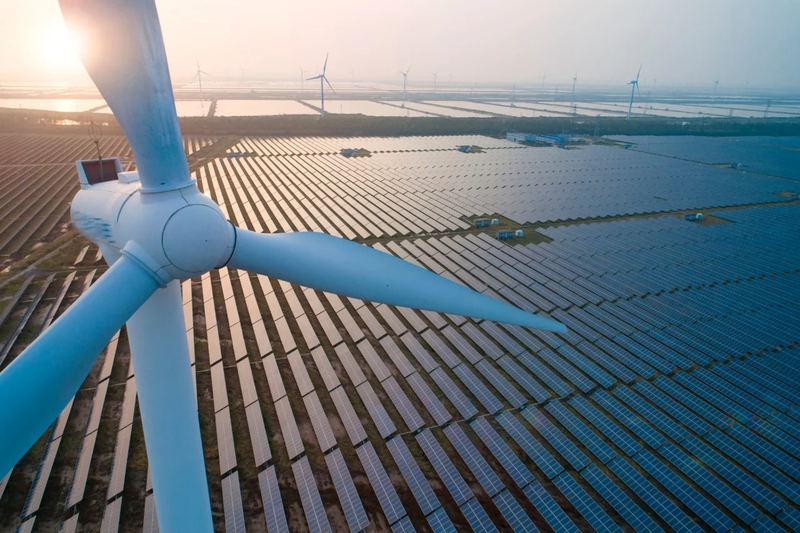
An examination of the actual market data reveals a series of structural inefficiencies in the Greek energy system, starting with the fact that the country has an installed renewable energy capacity of over 11 to 12 GW, which leads to severe peaks in generation during midday hours.
As a result of this congestion, green energy curtailments exceed 1,500 GWh per year, a volume corresponding to 50 per cent to 55 per cent of the country’s total net annual electricity exports.
In economic terms, Greece has a total book value of export turnover in the region of 1 billion euros; however, a significant proportion of this takes place during periods of zero or negative wholesale prices, drastically limiting the actual economic return on the surpluses.
The real cost of the lack of storage systems becomes clear when we translate the 1,500 GWh of wasted green energy into terms of fossil fuel consumption. Taking into account an average electrical efficiency of natural gas combined-cycle units in the range of 50 per cent to 55 per cent, approximately 2,700 to 3,000 GWh of thermal energy in fuel is required, figures which translate to approximately 250 to 280 million cubic metres of natural gas per year.
This means that the loss of free green energy due to a lack of flexibility forces the system to fill the energy gap during the evening peak by burning fossil fuels, imposing fuel and emissions costs on the market in the region of 180 to 200 million euros per year.
To put this into perspective, this shortfall cost similar amounts both at the height of the energy crisis in 2021 (when natural gas prices were at their peak) and today in 2026 (where the burden has shifted mainly to the increased cost of CO₂ emission allowances). In other words, every year, resources equivalent to the cost of building the very storage infrastructure that would save this energy are being thrown away.
The Structure of the Greek Market
In this context, any analysis of the issue cannot ignore the structure of the market.
Greece’s large vertically integrated energy groups are active simultaneously in renewable energy sources, electricity supply, energy trading, natural gas imports and trading, and the generation of electricity from thermal power stations, which continue to play a crucial role in the stability of the system.
However, this characteristic is not unique to Greece. Similar vertically integrated business models are found in almost all mature European markets, from France and Germany to Italy and Spain.
The difference, therefore, does not lie in the existence of vertically integrated groups but in the way in which they have incorporated new flexibility infrastructure into their portfolios.
In many European markets, the expansion of renewable energy sources was accompanied more rapidly by investments in storage, with the aim of reducing generation curtailments, optimising price fluctuations and reducing dependence on fossil fuels during peak hours.
In Greece, by contrast, the rapid penetration of renewable energy sources has not been matched at the same pace by corresponding storage infrastructure, with the result that an ever-increasing proportion of green generation is subject to curtailment or exported during periods of very low prices, whilst meeting evening demand continues to rely heavily on natural gas-fired power stations and cross-border imports.
If storage is now becoming a key component of the energy system’s infrastructure, then Bulgaria’s choice cannot be described solely as an excessive risk. It was, at the same time, a strategic move in a market that everyone now recognises as necessary.
For this reason, the debate should not focus on whether energy groups would make a profit from investments in batteries. This is the case in all functioning electricity markets. The real question is whether the country would today have seen smaller cuts to renewable energy, lower natural gas consumption, less exposure to price fluctuations and a more favourable cross-border energy balance. Energy economics does not assess intentions or corporate identities. It assesses results.
The Need for Flexibility Infrastructure
Consequently, the debate on the cost of storage cannot be limited solely to the expenditure avoided in the past. Energy economics is judged by overall balances, not by selective accounting calculations.
Greece did indeed avoid funding large-scale storage at an earlier stage. However, the available data suggest that the economic cost of energy that has not been stored is now approaching the same levels as the cost of the infrastructure that was not built.
In this sense, it is not certain that the country saved resources. In this sense, the debate is no longer about whether a cost was avoided, but whether the country chose to bear it in a different way and over a longer time horizon. The key question is not whether Greece exported or imported more MWh, but whether it maximised the economic value of the energy produced.
Naftemporiki / Opinions, Saturday, October 3, 2026
https://www.naftemporiki.gr/opinion/2170298/apothikeysi-energeias-to-kostos-tis-mi-ependysis/