Maritime straits as a structural memory of crises
One key point must be established from the outset: the infrastructures that shape today’s geopolitics are not elastic. They do not break abruptly, nor do they restart from scratch. They are inelastic. In physics, inelastic systems deform under pressure and recover only partially, slowly and never fully to their original state. They retain the memory of every shock; every disturbance leaves a structural imprint that determines the next one.
The new logic of global fragility
This is precisely how energy corridors, maritime straits, supply chains, electricity grids and even demographic infrastructures behave today. They buckle under pressure, recover imperfectly and accumulate fragility.
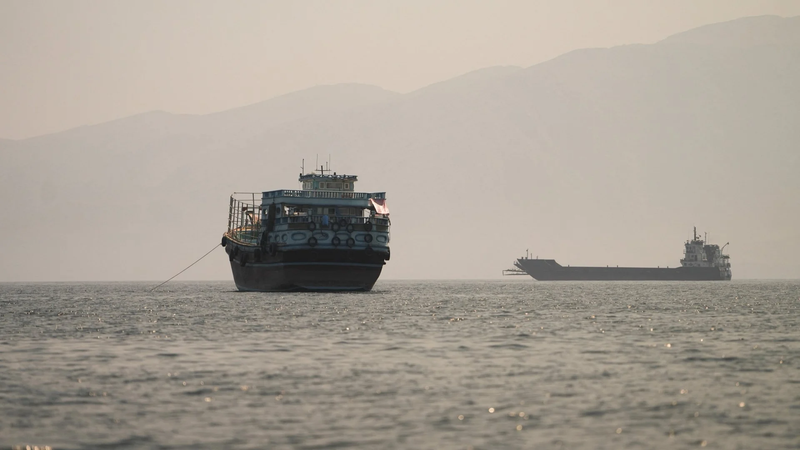
The Strait of Hormuz does not ‘reset’ after a crisis but reopens with higher insurance premiums, modified routes and new geopolitical levers. The events of 20–21 July 2026 confirmed this: the attacks by the IRGC – that is, Iran, which controls this narrow waterway – on merchant ships, and the avoidance of the US-protected corridor by major companies, immediately drove up insurance premiums and have already sent Brent crude above $90. The system never fully recovers but is weighed down by one shock after another.
The European energy system does not recover after a winter shock; it adapts slowly and imperfectly. India does not recover after climate disasters; it emerges with deeper inequalities. Global digital infrastructure is failing to keep pace with the demands of artificial intelligence; it is being stretched to breaking point and overheating. In an inflexible world, shocks reverberate.
Inelasticity on a historical scale
Inelasticity is not a new phenomenon; what is new is its scale. Never before has there been such a concentration of critical flows in such narrow physical chokepoints, nor such pressure from digital infrastructure, nor such a collapse in energy spare capacity. Following the Cold War, investment shifted away from strategic generation, creating networks that struggle to support both renewable energy and baseload power simultaneously. In the US, shale gas production increased inland, whilst coastal liquefaction infrastructure lagged behind. Thus, inflexibility has become a dominant principle of geopolitics: shocks do not disappear; they accumulate and leave permanent scars.
Energy arteries as a record of shocks
The world’s largest energy arteries behave like inelastic materials: they become deformed, recover only partially, and never return to their original state. The disruptions of 20–21 July – attacks in the Red Sea, tensions in the Strait of Hormuz, and diversions via the Cape of Good Hope – led to a sharp rise in freight rates, delays and insurance premiums. European jet fuel stocks have fallen to less than a month’s supply.
The Strait of Hormuz accounts for 20–21 per cent of global oil consumption and 20 per cent of LNG. Bab el-Mandeb accounts for 8–10 per cent of seaborne oil flows and 12 per cent of global trade. The Suez Canal and the SUMED pipeline account for 9–10 per cent of seaborne oil and 12 per cent of global trade. Over a third of the world’s seaborne oil and a large proportion of LNG pass through these three straits.
The Mozambique Channel: a safety valve
The Mozambique Channel, once of secondary importance, emerges as a strategic diversion route when the Red Sea is disrupted. The diversions of recent days have once again brought it to the fore, confirming its role as the ‘safety valve’ of globalisation. Natural straits form the backbone of global trade: narrow, exposed, irreplaceable. The tensions of the last 48 hours have heightened dependence on the Cape of Good Hope, increasing both transport costs and transit times.
Asymmetric actors and systemic memory
Asymmetric actors exploit this memory. The Houthis are disrupting trade in the Red Sea. The attacks on 20–21 July showed that any threat to Qatar’s LNG carriers translates directly into increased volatility in the LNG market. Iran exploits its geographical position in the Strait of Hormuz to directly influence global energy flows. When the US intervenes, the markets immediately price in new financial frictions.
The inelasticity of energy and digital power
The explosion in demand for electricity driven by artificial intelligence has transformed grids into inelastic systems. France now treats electricity as strategic infrastructure; Greece is exploring SMRs; Italy is strengthening the Adriatic backbone, in which Greece will play a major role. Europe remains inflexible, with 68–70 per cent of primary energy still coming from fossil fuels. In the US, shale gas production is increasing, but coastal liquefaction infrastructure is lagging behind.
The narrowest point determines the system
From maritime corridors to electricity grids, from LNG to demographic infrastructure, the same pattern repeats itself: flows converge, vulnerabilities accumulate and remedies remain incomplete. In an inelastic world, power lies not in the extent of a space but in the density of a single point. Where the memory of shocks becomes structure, that is precisely where the system’s future is written.
Naftemporiki / Opinions, Tuesday, July 21, 2026
https://www.naftemporiki.gr/opinion/2140839/ta-thalassia-stena-os-domiki-mnimi-ton-kriseon/