Newsletter September, 2026 - From Prices to Structural Costs
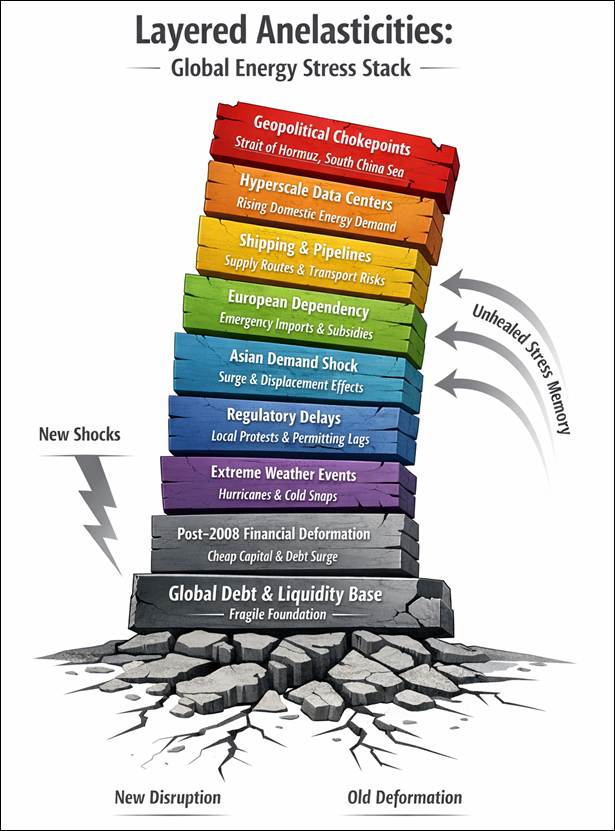
Energy & Geopolitics Newsletter - September 2026 From Prices to Structural Costs
The end of September articles continued the effort to explain the full energy chain from production to final consumption, showing that prices cannot be understood without considering infrastructure, transport, financing, security and system costs.
The first step was to complete the explanation of how energy prices are formed. Brent, wholesale electricity prices and retail energy bills are linked, but they are not the same thing. The final consumer price reflects a much broader economic chain.
➡️ Brent and the Simplification of the Fuel Pricing Chain
The analysis then moved toward a largely overlooked reality of the energy transition: the accumulation of depreciations and obligations. Existing infrastructures do not disappear when new ones are built. For years, societies must finance both simultaneously.
➡️ The Imported Energy, the Contradictions of the Green Transition and the Accumulation of Depreciations
➡️ The Continent of Accumulated Obligations
A second theme examined the interaction between demographics and energy transformation. The challenge is becoming not only technological, but also economic, as ageing societies finance increasingly capital-intensive energy systems.
Several articles also revisited the persistent assumption that energy transition automatically leads to lower prices. Storage, grids, system flexibility and reliability all have costs that remain largely absent from public discussion.
➡️ The Persistent Myth of Lower Prices
This culminated in a broader observation: storage increasingly reaches front pages while electricity costs become footnotes. Yet storage is part of the cost structure eventually borne by consumers and industry.
➡️ When Storage Becomes Front-Page News and Prices Become a Footnote
At the same time, the geopolitical developments of summer 2026 continued to remind Europe that energy security, supply corridors and resilience remain central economic variables.
➡️ Energy Geopolitics: The Summer of 2026 that Revealed the New Reality
➡️ Political Interview – September 2026
Taken together, these analyses point to the same conclusion: the central energy debate is no longer simply about prices. It is about the growing accumulation of capital costs, depreciations, demographic pressures and security requirements that increasingly shape the economics of the transition and the structural anelasticity of modern energy systems.