Storage Make the Front Page and Prices Become a Footnote
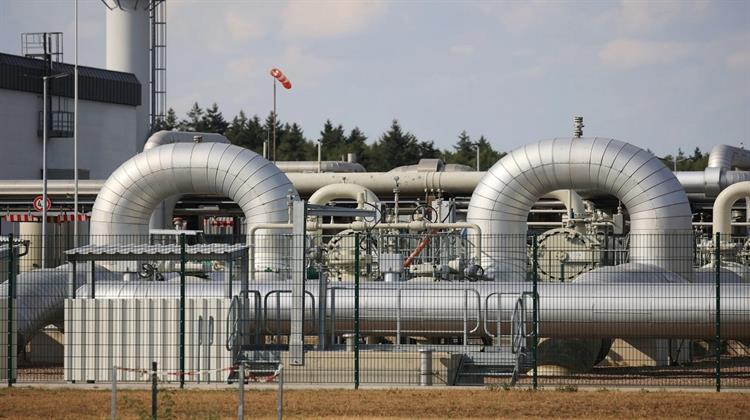
According to the Council of the European Union, the EU had achieve the 80 per cent target of gas storage as early as August 2022 and exceeded 90 per cent shortly afterwards. By contrast, in September 2026, stocks stood at around 68–70 per cent, significantly lower than in previous years. Nevertheless, the Council itself points out that there is no immediate risk to security of supply, as Europe now has greater diversification of supplies, increased LNG import capacity and lower demand for natural gas compared with the crisis period.
Even more significant is the price picture. The Dutch TTF benchmark, which is the key indicator for the European natural gas market, hovered around 10–20 €/MWh in 2020. Prices began to rise in 2021, whilst in the summer of 2022, following the Russian invasion of Ukraine and the drastic reduction in Russian gas flows, prices even exceeded 300 €/MWh. By contrast, in the autumn of 2026, prices stand at around 80 €/MWh, which is roughly a quarter of the extreme levels seen during the crisis.
The paradox becomes even greater when the regional dimension is considered. Whilst part of the European debate centres on the need for ever-higher storage levels and new LNG imports, the actual needs of the entire Western Balkans region remain extremely limited on a European scale. According to available data for the region, the total natural gas consumption of the six Western Balkan countries amounted to approximately 3.7 bcm per year, a figure corresponding to just 1 per cent of the European Union’s consumption. This observation highlights that the key challenge concerns not only the adequacy of supply but also the way in which market signals, investment priorities and policy choices are shaped. In many cases, the debate on storage seems to overshadow the more important questions concerning energy costs, the competitiveness of the European economy, the modernisation of European electricity grids and the utilisation of domestic energy resources.
The missing debate: prices, consumers and European resources
The one-sided focus on storage creates a second problem. It shifts the debate away from the cost of energy, the competitiveness of the economy and natural gas production towards a technical indicator of stock management.
European citizens are informed daily as to whether storage levels are at 70 per cent, 80 per cent or 90 per cent, but much less so about the fact that TTF prices have plummeted from the €300/MWh levels of 2022, without this reduction being passed on to the same extent in end-user energy bills. At the same time, European natural gas consumption has fallen significantly compared with pre-crisis levels, either due to energy-saving measures or to a reduction in industrial activity.
It is also rarely pointed out that the constant pressure to replenish storage facilities rapidly creates additional demand in the market. When governments, utility companies and infrastructure operators simultaneously purchase large quantities of natural gas to meet specific storage targets, this additional demand tends to support prices or prevent them from falling further. This obviously favours natural gas producers, LNG exporters and major suppliers, who benefit from higher sales volumes and an environment of strong demand.
Such transparency is essential to prevent the public from being misled. When public information is limited to numerical fill rates, two crucial truths are obscured: firstly, that the compulsory and rapid restocking of reserves entails high economic costs, which are ultimately passed on to consumers; and secondly, that the fall in wholesale prices is not automatically or proportionally reflected in end-user bills. Without a full analysis of the price structure, the costs of holding stocks (from the moment the gas enters the storage facility until it is consumed) and the actual degree of dependence on LNG imports, the narrative surrounding storage risks becoming a tool for complacency or artificial market manipulation.
At the same time, the focus on storage often serves as a political substitute for a more difficult debate: that of utilising Europe’s own energy resources. The public debate centres on where imported natural gas will be stored, rather than on whether Europe wishes to exploit its own hydrocarbon reserves where they exist and are economically viable.
This creates a paradox. Europe is discussing storage security at length, but says little about reducing energy costs for households and industry, and even less about boosting domestic production. However, energy security is not measured solely by the fill rate of storage facilities. It is also measured by whether citizens are paying lower bills, whether industry remains competitive, and whether Europe is making effective use of all its available energy resources.
In this sense, the excessive emphasis on storage as a key indicator risks overshadowing the debate on the real issues at stake in energy policy: prices, competitiveness, production and Europe’s strategic autonomy.
Sources: Gas Infrastructure Europe (AGSI+), European Commission, Council of the European Union, TTF market data and regional natural gas consumption figures for the Western Balkans. The estimates and conclusions in this article are based on an analysis of the above data.
ENERGIA.gr / News | European News, Saturday, October 2, 2026