The ongoing instability in the Gulf and the shocks caused by the war in Ukraine
Permanent Tension in the Gulf and the Maritime Corridors
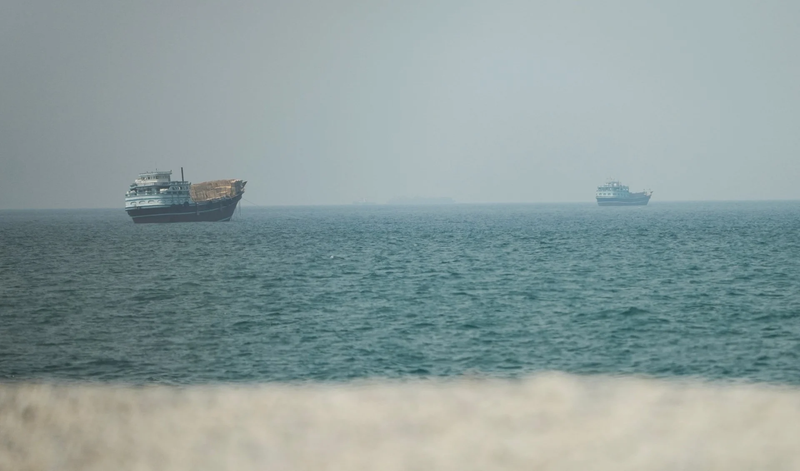
The Persian Gulf stands as the clearest example of structural instability. It is not a region that alternates between calm and crisis, but an environment where stability itself contains the seeds of uncertainty. The Strait of Hormuz, Bab el Mandeb, the offshore fields of the Arabian Peninsula, and Qatar’s LNG terminals form a system shaped by decades of geopolitical friction. Each new episode, even of limited scope, reactivates this accumulated tension. The energy corridors of the region do more than transport hydrocarbons, they transmit to the global market the enduring vulnerability of the Middle East.
The Ukraine Shock and the Lag Effect
The war in Ukraine erupted in a market already strained by pandemic disruptions, rising Gulf insurance costs, and fragile LNG balances. The sudden loss of Russian pipeline gas forced Europe to pivot sharply toward global LNG, redirecting cargoes and intensifying competition with Asian buyers.
This is where the concept of lag becomes visible. The system retains the imprint of past crises even after their immediate causes fade. Risk premiums remain elevated, sea lanes stay on alert, and investment capital shifts toward short term security rather than long term infrastructure. When the war triggered secondary disruptions in Kazakhstan, Poland, the Mediterranean, and Egypt, these pressures collided with the unresolved tensions of the Gulf, producing cumulative instability far greater than the sum of its parts.
Vulnerability of Infrastructure and Cyber Threats
A new layer of fragility now defines the global energy architecture: the growing vulnerability of physical and digital infrastructure. The modern supply chain depends on vast, centralized networks that have become prime targets of hybrid warfare. Pipelines, submarine cables, and LNG terminals stretch across international waters and unguarded zones, where protection is difficult. A single malfunction or targeted attack can instantly cut off entire regions from power or heat. Floating storage units and LNG compression terminals are unique points of failure whose loss can paralyze local markets.
Digitalization has expanded the attack surface. Supervisory and industrial control systems that regulate oil, gas, and electricity flows are frequent targets of state and non‑state cyberattacks. Ransomware and specialized malware can cripple refineries, distribution networks, or power dispatch centers, creating artificial shortages. A cyberattack requires no troops yet can deliver the same economic shock as a military strike, amplifying investor uncertainty.
Interconnected Fields of Pressure
The Gulf, Ukraine, and hybrid threats are not isolated phenomena but interconnected fields of pressure. When maritime risk rises in the Middle East, LNG prices in Europe react immediately. When a pipeline or control system fails in Europe, Gulf producers gain pricing power.
The global energy system resembles a tower built on unstable foundations. The Gulf forms the structural base, Ukraine adds weight at the top, and infrastructure vulnerability continuously erodes cohesion. When these forces align, the entire structure tilts.
The New Architecture of Global Energy Instability
The shift from elasticity to anelasticity marks a fundamental change in the global economy. Instability is no longer a temporary deviation from normality, it has become the defining condition of the system.
The consequences are profound. The system lacks the safety margins to absorb shocks, making price fluctuations sharper and longer lasting. Rising costs of insurance, navigation, physical protection, and cybersecurity are permanently passed on to consumers and industry. In this anelastic environment, energy ceases to be a simple commodity and becomes an instrument of pressure, coercion, and hybrid conflict. The stability is only a brief pause before the next inevitable shock.
Naftemporiki / Opinions, Friday, July 31, 2026